mdblist.com logo Movie Search


Ratings
Between
and
Between
and
Between
and
With at least
votes
Between
and
With at least
votes
Between
and
With at least
votes
Between
and
With at least
votes
Between
and
With at least
votes
Between
and
With at least
votes
Between
and
With at least
votes
Between
and
With at least
votes
Additional filters
m
Lists, Streaming Services, Cast and more
Create List (44 items)

Login to create a dynamic list


poster
?
20
/1/

The Flying Scotsman (2000)
One of Britain's premier expresses, The Flying Scotsman completed the 393 miles from King's Cross to Edinburgh in just over four hours - an average speed of 94.3 miles an hour! Highlights Part One includes the exit from King's Cross with the various tunnels, the infamous Welwyn bottleneck, which brings the ECML down to just two tracks, the Newark flat crossing, (the last in the UK) the Selby new line, and Stoke bank, where "Mallard" achieved the world speed record for steam traction. We even take a look inside the A4 engine housed within the National Railway Museum at York. Part Two covers the second leg from York to Edinburgh calling only at Newcastle. Highlights include: Darlington Bank Top avoiding line, the approach to Newcastle - crossing the mighty River Tyne, the notorious curve at Morpeth, the Royal Border Bridge at Berwick, the scenic coastal sections and the approach to Edinburgh Waverley itself.
poster
?
20
/1/

Midland Mainline (2000)
Filmed from the cab of a High Speed Train, St Pancras station was filmed just before the major rebuilding of the terminus to handle Eurostar international trains in 2007. This is St Pancras as we remember it, complete with the famous gasometers which have since been removed.
poster
?
10
/1/

Metropolitan Main Line (1995)
The Metropolitan main line is now the exclusive domain of S8 stock trains introduced between 2010 and 2012. The iconic “A” stock trains plied the route for over 50 years, firstly in unpainted aluminium finish and later in refurbished blue, red and white Underground colours. Filmed in 1995, here you can see both incarnations of the A stock at work – a tastefully refurbished train running on the main line, with unpainted stock (with the inevitable graffiti) running on the branches.
poster
?
70
/1/

The Uckfield Thumper (2003)
These unique trains have long been called Thumpers due to the distinctive sound of their single on board diesel engines. Now, after the units' well earned retirement, this record of their unmistakeable sound (from trackside and on board) lives on in stereo. Surprisingly, the Uckfield branch is fascinating in itself. It is the stub of a former through route from Tunbridge Wells to Lewes. Nowadays the route features both single and double track sections. Following the fatal head on collision at Cowden in 1994, strict new operating procedures were put into place including the provision of SPAD signals at strategic points.
poster
?
10
/1/

The Cambrian Coast: Machynlleth to Barmouth (1988)
Driver's Eye View: Machynlleth to Barmouth Narrated by Dafydd Hywel This driver's eye view manages to convey the sleepy backwater that the Cambrian Coast line is nowadays. Our class 150 "Sprinter" makes an unscheduled stop at Dovey Junction to pick up a couple of passengers deposited on this out-of-the-way station with no road access. Out onto the coast we encounter the most notorious section on the whole line - the narrowest of ledges cut into the sheer rockface of the Friog cliffs and the site of two disasters. Finally, there is the half-mile long timber trestle bridge at Barmouth, still standing in splendid isolation across the Mawddach estuary. Two other railways are featured en route, the Talyllyn narrow gauge railway at Tywyn and the Fairbourne and Barmouth Steam railway. Filmed in 1988.
poster
?
20
/1/

Transpenninexpress (2000)
The main rail line over the Pennines via Huddersfield, sees four Transpenninexpresses plying the route every hour. The line climbs or falls almost continuously for 43 miles, the only level section being inside Standedge Tunnel, the major engineering feature of the line. The tunnel is the fourth longest on the national network at 3 miles 66 yards. Both it and the other major tunnel at Morley are seen (and heard) from the driver's cab with the aid of additional lighting. Today's route incorporates the lines of various pre-grouping companies with no less than ten significant junctions being traversed between Manchester and Leeds. Our class 158 Express then continues to York over another three - the last of which brings us onto the East Coast Main Line. As well as gradients, junctions and tunnels, the route also features track circuit block signalling. Last, but not least Yorkshire ITV's Geoff Druett tells of the fascinating history.
poster
?
40
/2/

HST Great West (1993)
The magnificent engineering of Isambard Kingdom Brunel's original Great Western Railway is best appreciated from the driver's cab, in this case an InterCity 125 High Speed Train. Filmed in 1993, we proceed through the outskirts of London at an exhilarating 125mph, over the Wharncliffe viaduct at Brent (where construction of the GWR actually began in 1835) across the Thames at Maidenhead (the bridge that was expected to fall down) through the expansive Sonning Cutting to arrive at the "hub" station of Reading. Next stop is Swindon, followed by a non-stop run to Bath through the famous Box Tunnel (the last section to be opened, well behind schedule) before arriving at Bristol Temple Meads. Here we see inside Brunel's original terminus, with its wooden overall roof, an amazing survivor through sheer quirk of fate.
poster
?
10
/1/

Ffestiniog & Conwy (1992)
The 13 .5 mile narrow gauge line was originally built to carry slate and for many years was worked by gravity. We travel aboard one of the famous double Fairlie steam engines - "Merddin Emrys" for a ride that is typically rocky in places. The terrain changes from the wide open "Cob" at Porthmadog, to the fertile wooded valley in the vale of Ffestiniog and the Snowdonia National Park, to the slate capital of Wales itself, Blaenau Ffestiniog. Within the first mile of the former LNWR line, on board a class 101 DMU, we pass amongst the old mine and quarry workings and enter the 2¼ mile long Ffestiniog tunnel. At the end of the tunnel is the wild and remote Lledr valley. After Betws-y-coed the line levels out and we dash along the Conwy Valley to Llandudno Junction, on the Holyhead main line. Finally, we traverse the three mile long double track branch to Llandudno, in 1991 still block-worked with semaphore signals. Filmed in 1992
poster
?
15
/2/

Fawley Hill (2023)
BBC Bargain Hunt's Charlie Ross takes a detailed look around the Late Sir William McAlpine's full-size railway and museum, built in his own back yard. Having been acquired over five decades, Sir William's collection is truly massive. The film starts at the beginning of the year when the ex-BR class 03 diesel shunter is started up. There's a lot of steam action too, with the resident 0-6-0 saddle tank engine, seen charging up and down the incredible 1 in 14 gradient of the hill line on training and public open days. Charlie takes a look around the extensive museum, containing a myriad of railway artefacts. He's shown inside the two royal coaches, the signal boxes, the O gauge model railways and the main station building, re-erected here from Somersham in Cambridgeshire. Sir William's widow, Lady Judy McAlpine tells us about her late husband's insatiable enthusiasm. There's so much to see and appreciate in this unique private railway.
poster
?
60
/1/

Isle of Wight - Driver's Eye View Documentary (2010)
SHANKLIN TO RYDE PIER HEAD (electric) SMALLBROOK JUNCTION TO WOOTTON (steam) Filmed in 2010
poster
?
10
/1/
100
/1/

1066 DC (1988)
At the Southern end of the line, the three stations around St Leonards are separated by two long tunnels. Emerging at Bopeep Junction our "4-CEP" EMU - in the much lamented "Jaffa cake" colour scheme - turns north through the East Sussex countryside through Battle to Tunbridge Wells. The character of the line changes at Tonbridge as we join the main artery from Ashford, Dover and Folkestone. The Hastings line became infamous for its tunnels. Many had been constructed by a rogue contractor who saved thousands of pounds by only lining the tunnel with one row of bricks instead of the specified two. In danger of collapse, when the scam was realised a second layer had to be built inside, reducing the overall width. Following this, special narrow bodied trains had to be specially constructed. Since the scrapping of these and in order to allow the passage of standard width stock at the time of the 1980's electrification, many of the tunnels had to be singled.
poster
?
10
/1/

HST Far West (1990)
This starts at the Royal Albert Bridge. The 75 miles from Saltash to Penzance contains the greatest number of viaducts per mile on any British Railway and such exaggerated curvature that there is only one dead straight mile of track throughout. Once again, virtually the whole route is shown including the many single line sections. There are dozens of aerial views taken from a helicopter on both of the above productions. Features include the Atmospheric Railway pump house at Starcross, Dobwalls miniature railroad and the Bodmin Steam Railway.
poster
?
40
/2/

Central (1992)
This is the original Driver's eye view filmed in 1992 from 1962 stock trains, still operating with crews of two, one of the very last years of train guards on the Underground. It was also one of the last years of the Ongar branch.
poster
?
10
/1/

Wessex - Weymouth to Waterloo (1994)
This Driver's eye view begins with a brief look at the unique street-running Weymouth quay "tramway" from a class 73 Electro-Diesel Locomotive. It is unlikely that this line will ever see a train again so it is also included on the DVD as a menu driven bonus. Our main line train is a class 442 Wessex electric still in Network SouthEast colours. We head out of Weymouth and climb up towards Dorchester South, the 5 coach train taking all the power available from the third rail. Turning east the train calls at the intermediate stations as far as Poole and Bournemouth, with their classic causeway approaches. Speeding up, we call at Brockenhurst (for connection with the Lymington branch) and pass through the delightful stretch of unspoilt New Forest to Southampton. We then run non-stop at up to 100 mph along the former LSWR quadruple track main line via Basingstoke, Woking and Clapham Junction into Waterloo. Filmed in 1994
poster
?
20
/1/

InterCity Norwich (1997)
With a top speed of 100 mph, the hourly InterCity trains normally cover the 115 miles between the capital of East Anglia and London's Liverpool Street Station in well under 2 hours. One feature of note is the single line swing bridge built at the time of electrification to Norwich in 1987. It is one of only a handful of operational swing bridges in the world provided with overhead line equipment. Our InterCity express calls at Diss, Stowmarket and Ipswich. South of Ipswich, Anglia trains are joined by those of GER, and at Colchester by Clacton services - all squeezed onto just two tracks signalled for bi-directional working. Relief comes at Shenfield where the Southend lines provide an additional pair of tracks. With freight traffic to Felixstowe and Harwich a wide variety of trains rush past.
poster
?
45
/2/

Jubilee Driver's eye view (2001)
This video begins at Stanmore, having been opened by the Metropolitan Railway but subsequently taken over by the Bakerloo. After four stations, we join the multiple tracks of the Metropolitan and Chiltern Lines. At Finchley Road the old cast iron Bakerloo tunnel section begins and with additional lighting you will see the tunnels in the best possible light. At Baker Street, the Jubilee proper starts, with the original opening to Charing Cross as recently as 1979. As this is a Video 125 production we couldn't avoid the temptation of seeing what has become of the old Jubilee terminus, now abandoned but still retained in the event of an emergency. Our train then diverges at Green Park and takes the new Jubilee line extension through Waterloo and Docklands.
poster
?

The Chiltern Bubble Cars (2017)
The 19th May 2017 was the last day that first-generation DMUs ran in regular passenger service on Network Rail. These were the two class 121 Bubble cars owned by Chiltern Railways that were used on the Princes Risborough to Aylesbury branch. To record and commemorate the event, Video 125 cameras followed the single units (affectionately dubbed Bubble Cars) in the weeks prior to their withdrawal. The idea for this film came from the former Managing Director of Chiltern Trains Holidays, Tony Parkins, who has been closely associated with Chiltern Railways ever since his involvement with the writing of our Driver's eye view Chiltern Take Two. It was Tony's idea to produce this film and as such has not only co-written and researched the information but actually presents it to camera.
poster
?

Eurostar: Paris to London Waterloo (2004)
Since 2007, Eurostar high-speed passenger trains have been running over HS1 into London St Pancras International. All services transferred there with the completion of High Speed One - the UK’s first high-speed railway line (running between the Channel Tunnel and London). Prior to that, from 1994 to 2007 Eurostar trains ran over the former Southern Railway lines into Waterloo International. In 2004, Video 125 produced a Driver’s eye view of the route from Paris Gare du Nord via Lille and the Channel Tunnel and the first section of HS1 but running into London Waterloo International via Fawkham Junction. As Video 125 produced a NEW Driver’s eye view in 2007 showing the current line into St Pancras International (from Brussels Midi) we withdrew the Waterloo production from sale.
poster
?

Marseille to Paris (2005)
Completed in June 2001, the LGV Méditerranée joined up with the LGV Rhône Alpes and the original Paris/Lyon TGV line completing the link between Marseille and Paris. Now is your chance to see this truly amazing feat of engineering from the cab of a Duplex (double deck) TGV. The Ligne a Grande Vitesse (LGV) features dozens of massive viaducts, tunnels and earthworks cutting a swathe through the French countryside (with no expense spared) to allow for very high speed running.
poster
?

The North London Line (2006)
The North London Line was unique in being the only Network Rail route to be consistently featured on the London Underground map. 2006 was the last year of operation into North Woolwich by the class 313 EMUs. To record this for posterity,the train operator at the time, Silverlink Trains, allowed Video 125 cameras unrestricted access to train cab and stations along the route. The route was electrified at 25KV overhead to allow vital freight movements around the capital. One of the most unusual stations is that at Willesden Junction, the platforms being positioned above the West Coast Main Line and the affiliated “DC lines” from Euston to Watford. The history of the route is complex but totally fascinating, details of which are related en route by Rob Curling.
poster
?

The Down Fishguard (2002)
The direct line from Swindon, via Bristol Parkway, was built to reduce the journey time from South Wales in conjunction with the Severn Tunnel. In 2002, one service a day continued to Fishguard in connection with the ferry to the Emerald Isle. These are now history but Video 125 cameras managed to ride aboard a First Great Western 125 High Speed Train (HST) before the through services were abandoned. For most of our journey in the cab, we are travelling through Wales on the country's major main line - the South Wales. Engineered by I.K.Brunel, it was the last main line to be built to the 7ft broad gauge. The double line eventually gives way to a single track at Clarbeston Road. The 3/4 mile Fishguard branch is worked by electric token. The train calls at Bristol Parkway, Newport, Cardiff, Bridgend, Port Talbot, Neath, Swansea, and Whitland.
poster
?

Highland Main Line (2002)
This Driver's eye view puts you in the cab of a brand new Scotrail Turbostar class 170 for the 118 mile trip over the Highland main line. Perth is the gateway to the Highlands of Scotland and still boasts a large imposing station. The main line features stretches of double and single track with semaphore block signalling predominating to Aviemore.There are stiff climbs to the two summits at Druimuachdar and Slochd, the latter forming the summit of the Inverness cut-off line. This direct line from Aviemore to Inverness was a major feat of civil engineering forced upon the Highland Railway company by the threat of competition. It was completed in 1898 having taken 14 years to build. The two largest structures spanning the rivers Findhorn and Nairn are seen, like the rest of the route, not just from the cab but from a helicopter flying overhead!
poster
?

Enterprise - Dublin to Belfast (2006)
The Dublin to Belfast route is 113½ miles long. Our journey begins at Dublin’s Connolly Station. For the first few miles we proceed through the rapidly re-generating suburbs under the wires of the DART (Dublin Area Rapid Transit). This is a route of great interest with double line throughout. Our 90 mile an hour express was filmed mostly in sunshine. Much of the history of this interesting and scenic route is related by TV personality Henry Kelly.
poster
?

Kent Coast (2007)
Ramsgate has been on the railway map since 1846. Eventually two rival companies served the town for over fifty years until the Southern Railway built a connecting line between the two. At the time of filming there were two main routes into the town, one via Ashford from Charing Cross and the route we are taking via Chatham into London Victoria. This Driver's eye view was filmed before the introduction of SouthEastern's high speed Javellin services into St Pancras. It therefore shows our 4 coach class 375 Electrostar starting off as the hourly fast service calling at selected stations to Faversham. Here we join up with a similar 4 car set from Dover. We then call at Sittingbourne and the Medway Towns of Rainham, Gillingham, Chatham and Rochester. Once over the Medway itself, our 8 coach train runs fast to Victoria calling only at Bromley South.
poster
?

Settle and Carlisle
The Settle and Carlisle was built to provide the Midland Railway with its own route to Scotland. It was a magnificent engineering feat, making a smooth path through difficult terrain that was fit for nothing less than steam express trains. The best way of appreciating it is from the drving cab, little changed in over a hundred years. We join a 2 car Sprinter at Skipton. This fast service takes us through the restored junction station at Hellifield complete with semaphore signalling. We join the famous long drag at Settle Junction - 15 miles of almost continuous climb up to Blea Moor. The 24 arch Ribblehead viaduct is seen from the air as well as from the driver’s cab. Our sprinter disappears into the long tunnels at Blea Moor and Rise Hill while we fly over the top for a surprising view! The Long Drag is shown almost in real time with Appleby to Carlisle discretely condensed into half an hour. This is as much a Bird's eye view as a Driver's eye view.
poster
?

Heart of Wales
The normal four hour journey has been condensed into a video of just one and a half hours of the most interesting and scenic sections. These include the departure from Swansea, the 1 in 52 climb up to Cockett tunnel and the reversal at Llanelli. Nowadays the route is signalled entirely from Pantyffynnon Box, and here we see the line's last remaining semaphores. Our single car class 153 unit then tackles the famous bank up to Sugar Loaf tunnel.
poster
?

The Old Gotthard Tunnel Route - Driver's Eye View (2018)
The original Gotthard railway tunnel through the Swiss Alps, took ten years to build and cost 147 lives. It was a mammoth undertaking and required the construction of long ramps on either side totalling 85 miles. Dozens of tunnels, viaducts and bridges were necessary. The ruling gradient of 1 in 37 was deemed to be just about the maximum that the original steam locomotives could handle, even then, trains were usually double-headed and even had banking engines attached at the rear! In order even to keep to this severe gradient, the engineers had to construct a number of additional spiral tunnels to gain height, hewn out of solid rock…
poster
?

The Tyne Valley Line - Driver's Eye View (2018)
The Newcastle & Carlisle dates right back to 1825, one of the earliest railway schemes in Britain. It opened in stages from 1834 initially to carry minerals. The railway roughly follows the course of Hadrian's Wall, marking the northernmost border of the Roman Empire in 122 AD. The railway has become an important link between the East and West Coast main lines.
poster
?

Edinburgh & Glasgow Driver's eye view (2019)
Filmed from the Driver's cab of a class 385 EMU we travel on a ScotRail express from Glasgow Queen Street to Edinburgh Waverley via Falkirk High, then from Edinburgh to Glasgow Central via Shotts.
poster
?

The Golden Valley - Swindon to Gloucester (2006)
Skirting the edge of the Cotswolds the line from Swindon to Gloucester runs through the valley of the River Frome – enchantingly known as the Golden Valley. The viewing platform for our 36¾ mile journey is a 2-car class 143 Pacer operated by Wessex Trains. Some of the delights of any journey over this route are the classic GWR stations at Kemble and Stroud, little changed over time. As well as the usual shots of the driver at work, trackside runpasts and station sequences, there are aerial shots taken from a helicopter.
poster
?

The Berks & Hants Driver's eye view (2019)
Driver's eye view of the GWR from Exeter St Davids to London Paddington from the cab of a brand new class 802 Intercity Express Train.
poster
?

Thames Branches
This is an opportunity to see four of the GWR Thames Valley branch lines from the driver’s cab. We start at Paddington for a run along the Greenford branch taking us over the Great Western main line via Ealing Broadway, the line terminating at Greenford sandwiched between the tracks of LUL’s Central Line. We then travel over the Windsor branch from Slough into the one-time showpiece Royal station facing Windsor Castle. Unusually we return part of the way to show the junction arrangement at Slough. The Marlow branch is the fascinating legacy of the one-time through route to High Wycombe requiring a reversal at the constricted junction at Bourne End. Finally, we travel over the line to Henley on Thames. All trains on the four branch lines consist of 2-car class 165 Turbo DMUs. Filmed in the summer sunshine of 2015.
poster
?

Aberdeen to Inverness (2006)
The railway between Aberdeen and Inverness was built by the Great North of Scotland Railway, the Inverness and Aberdeen Junction and the Inverness and Nairn, the former two companies meeting end on at Keith. Of the 50 stations that have come and gone over the years, ten remain open. In little over a hundred miles we encounter 16 existing, or former, rail junctions - on average one every seven miles - a remarkable testament to the commercial rivalry and duplicity of lines between the Highland and GNSR companies in the latter half of the 19th Century. Today the route is operated by First Scotrail class 158 "Express Sprinters". The route is mostly of single line and features tokenless block and electric key token sections controlled from manual signal boxes with semaphore signals. This scenic route was filmed in sunny or good weather from the cab, from the trackside and from the air. Much of the fascinating history is to be found in the narration, expertly delivered by Sally Magnusson.
poster
?

Lickey Voyager (2005)
We join an Exeter to Newcastle service formed of a five car Virgin Super Voyager at Bristol Temple Meads station. The limited stop service calls next at Bristol Parkway before branching off the Great Western onto the former Bristol and Gloucester Railway. By-passing Gloucester by means of the south loop, the next stop is Cheltenham Spa. Now we run non-stop all the way to Birmingham New Street via Bromsgrove and the notorious Lickey Incline. This is the two mile long ascent of the Lickey Hills at a gradient of 1 in 37 ¾, the steepest bank on any main line in Great Britain. From Birmingham New Street our class 221 takes the former Birmingham and Derby Junction Railway running non-stop at up to 125 miles an hour through Tamworth and Burton on Trent to reach the county town of Derbyshire. Much of the fascinating history of the route is related by Alan Hardwick, long-time anchor of Yorkshire ITV’s evening news programme Calendar.
poster
?

Central Line (2011)
Much requested by our customers, we have taken the opportunity of filming the Woodford branch through the Roding Valley to Hainault and on to Leytonstone on board a 1992 stock train. We then switch our attention to the main Central Line that runs through the very heart of London.
poster
?

Hammersmith & Circle (2014)
N/A
poster
?

Bakerloo & City Driver's Eye View (2007)
The Bakerloo Line is one of London Underground's main arteries, connecting four of the capital's main line railway stations with the heart of London's West End. The southern terminus at Elephant and Castle consists of just two platforms, requiring fast turnarounds to provide the 3 minute service interval. Just under half the 14½ mile line is in tube tunnel, The 1972 stock trains (amongst the oldest running on the network) surface at Queen's Park. Roughly one in three continues to Harrow and Wealdstone alongside the West Coast Main Line. As well as seeing the entire route in real time from the driver's cab, we also peek inside the Bakerloo Line's signalling and control centre at Baker Street. The Waterloo and City line is LUL's smallest self-contained operation, running for just over 1½ miles between Waterloo and Bank.
poster
?

East London and District (2005)
The East London Line was filmed just a couple of years before its closure and total metamorhosis. Nowadays, forming part of the London Overground, here we can see the old Metropolitan stock as many of us remember them running on the East London Line. Services alternated between the two southern termini of New Cross and New Cross Gate. Our journey on board an ‘A’ stock train begins at the former and takes us through the very oldest part of civil engineering on the underground network, Marc Brunel’s 1843 tunnel under the Thames. Peak services continued to Shoreditch, which is where our journey ends.
poster
?

The Royal Scot (2012)
Originally filmed and released in two parts on video cassette, we can now see virtually the whole of the WCML on the one DVD. Part one covers the leg from Euston to Preston, scheduled to run non-stop at a maximum speed of 110 mph behind a classic class 87 electric loco - now nearly all consigned to the scrap heap. The former LNWR main line takes us via Watford Junction, Milton Keynes, Rugby, Stafford and Crewe. Due to a broken rail the train takes an unscheduled diversion onto the slow line for a few miles north of Watford. Part two covers the second leg of the 401 mile journey to Glasgow Central, running via Lancaster, Carnforth, Oxenholme, Penrith, Carlisle, Lockerbie, and Carstairs. Our class 87 manages to maintain a speed of 90 mph over the legendary 1 in 75 banks up to Shap and Beattock summits - an achievement that would have been unimaginable in steam days. Filmed in 1995/1996
poster
?

Victoria Line (Driver's eye view) (2009)
The Victoria Line is London’s busiest underground line. 15 out of the 16 stations provide interchange with other underground lines or Network Rail. The 1967 stock trains were filmed in their last few years of service in 2009. These were the first fully automatic trains in London running on the Victoria line which was opened in stages from Walthamstow in East London. The whole line is seen in virtually real time from the operator’s cab with the aid of additional lighting. This is more than a Driver’s eye view, for we also follow the progress of our southbound train on the track diagrams of the service control centre, we see inside all the stations with their famous tiled murals, the exteriors of many and of course the operator himself.
poster
?

Piccadilly Driver's Eye View (2003)
Our 1973 stock train, takes you right through the centre of the capital and out into the North London suburbs. Emerging from tunnel at Arnos Grove our train continues to Cockfosters in Hertfordshire. The section between Acton Town and Hammersmith is unique in being the only 'tube' line to feature express running - leaving the parallel District line to provide the stopping service. We then return to Acton Town and board another 1973 stock train for a drivers's eye view of the Heathrow Airport branch, running via Terminal 4 to end at Terminals 1, 2 & 3. This line, much of which was built by the District Railway, has another unique feature for a tube line, a quadruple track section from Acton Town to Northfields. As well as seeing four closed stations from the driver's cab we also pay a visit to Aldwych, the terminus of the short branch which ran from Holborn but closed in 1994.
poster
?

Eurostar: Brussels to London St Pancras (2009)
Unprecedented cooperation from Eurostar enabled Video 125 cameras to film a high speed journey from the Capital of Belgium to the Capital of England via the Channel Tunnel. Riding with the driver at speeds of up to 300 kilometres an hour, or 186 miles an hour, is an exhilarating experience. Just click on the preview to see what we mean. The entire route is shown in virtual real time.* As well as calling at Lille Europe and Ebbsfleet International, we follow our class 373's progress from the five control centres which are responsible for our train as it passes through Belgium, France, the Channel Tunnel and England. There are two bonus features: Temple Mills Depot, opened in time for the start of services into St Pancras. Comings and goings at Brussels Midi. While our cameras were set up on the platform we filmed a dozen or more trains to show the diversity of traction and rolling stock.
poster
?

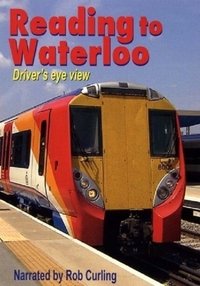
Reading to Waterloo (2013)
This Driver's eye view is the South West Trains service for London Waterloo. Calling at Earley, Winnersh Triangle, Winnersh, Wokingham, Bracknell, Martins Heron, Ascot, Sunningdale, Virginia Water, Egham, Staines, Feltham, Twickenham, Richmond, Clapham Junction and London Waterloo. This is the service from Reading. This train is formed of eight coaches. This busy commuter line has a minimum half hourly service throughout the day including Sundays. Almost all the trains are formed of Alstom Junipers and we follow ours from three signal boxes. Surprisingly, Wokingham signal box is still operated from a traditional lever frame. Our train is then passed to Feltham power 'box. From Richmond, control passes to Wimbledon PSB which takes our train all the way into Waterloo. This Driver's eye view was filmed in the summer sunshine of 2013.
poster
?

The Northern Lights
An InterCity 125 HST is our viewing platform for this superb journey up the east coast of Scotland. The stereo sound of the original Paxman Valenta engines is a joy to the ears.


mdblist.com © 2020 | Contact | Reddit | Discord | API | Privacy Policy