mdblist.com logo Movie Search


Ratings
Between
and
Between
and
Between
and
With at least
votes
Between
and
With at least
votes
Between
and
With at least
votes
Between
and
With at least
votes
Between
and
With at least
votes
Between
and
With at least
votes
Between
and
With at least
votes
Between
and
With at least
votes
Additional filters
m
Lists, Streaming Services, Cast and more
Create List (45 items)

Login to create a dynamic list


poster
Kanopy
74
6.9
/1580/
66
/62/
61
/24/
3.7
/6827/
95
/56/
67
/6/
77
/15/

The Twentieth Century (2019)
Toronto, Canada, 1899. William Lyon Mackenzie King (1874-1950) fervently believes that he is destined to become Prime Minister, but to do so he will first have to fight his personal obsessions and overcome the many obstacles he will encounter on his tortuous path to power.
poster
Hoopla
52
26
6.3
/1046/
67
/105/
55
/34/
3.1
/709/
25
/8/
45
/12/

Being Canadian (2015)
What does it actually mean to be Canadian? This humorous documentary, featuring interviews with a who's-who of famous Canadians, hopes to find the answer.
poster
Amazon Prime Video
79
16
7.7
/771/
76
/25/
73
/9/
3.5
/633/
100
/4/

We Were Children (2012)
For over 130 years till 1996, more than 100,000 of Canada's First Nations children were legally required to attend government-funded schools run by various Christian faiths. There were 80 of these 'residential schools' across the country. Most children were sent to faraway schools that separated them from their families and traditional land. These children endured brutality, physical hardship, mental degradation, and the complete erasure of their culture. The schools were part of a wider program of assimilation designed to integrate the native population into 'Canadian society.' These schools were established with the express purpose 'To kill the Indian in the child.' Told through their own voices, 'We Were Children' is the shocking true story of two such children: Glen Anaquod and Lyna Hart.
poster
?
7.2
/35/
80
/2/
55
/2/

The Good Canadian (2025)
The world knows the image of the good Canadian. But what if there was a dark secret behind a national identity? THE GOOD CANADIAN exposes the truth behind the idea of a True North strong and free. In this unflinching and eye-opening documentary, directors Leena Minifie and David Paperny move us through the corridors of systemic inequity, from the Indian Act to residential schools, to modern-day family separation. Fusing shocking footage with detailed interviews with experts, advocates, whistleblowers and politicians, THE GOOD CANADIAN challenges national myth-making, while offering Canadians the chance to forge a new identity from the truth.
poster
?
10
/1/

The Relationship (1988)
This film explores how Canada wavers between rejection and acceptance of closer ties with the United States, tracing the historical precedents of current issues between the two nations. Canada continues to question her identity despite the influence of a powerful neighbour.
poster
?
5.8
/11/
60
/1/

Chaos Glacier Country (2024)
An expedition to climb British Columbia's highest mountain goes awry in the face of bad weather, a series of comic mishaps and the stubborn insistence of its leader on using antique climbing equipment.
poster
?
7.2
/27/
20
/1/
80
/1/

Black October (2000)
A documentary recounting the kidnappings of British Trade Commissioner James Cross and Quebec Vice-Premier & Minister of Labour Pierre Laporte by the FLQ on October 5, 1970 in Quebec.
poster
?
6.0
/6/

The Hector: From Scotland to Nova Scotia (2017)
The story of the 1773 highland migrants who left Scotland to settle in Nova Scotia.
poster
?
6.8
/21/
10
/1/

Ville-Marie (1965)
Today it is the city of Montreal, but 3 centuries ago the tiny band of missionary founders called it Ville-Marie, the holy city of Mary. This film goes back to its beginning and those who felt called to plant an oasis of Christianity in the North American wilderness. In an imaginative, at times almost surrealistic, way the film recalls the highborn company from France, and shows what survives of Ville-Marie in the Montreal of today.
poster
?
6.8
/12/
10
/1/

The Last Voyage of Henry Hudson (1964)
This short film realistically portrays the conflict Henry Hudson experienced when he went in search of an open water route to the Orient, and no one would follow him. What he discovered instead was an inland sea, a discovery that ended in tragedy.
poster
?
80
/1/

The Secret Order (2022)
Phil Comeau shines a spotlight on the Ordre de Jacques-Cartier, a powerful secret society that operated from 1926 to 1965, infiltrating every sector of Canadian society and forging the fate of French-language communities. Through never-before-heard testimony from former members of the Order, along with historically accurate dramatic reconstructions, this film paints a gripping portrait of the social and political struggles of Canadian francophone-minority communities.
poster
?
100
/1/

The Little Church That Could (2022)
Amidst a mostly Catholic community, a small tiny Anglican church offers more to the community of Placentia than people may think, and holds many connections and history to the rest of the world.
poster
?
8.4
/9/
10
/1/

Women in the Shadows (1991)
Filmed on location in Saskatchewan from the Qu'Appelle Valley to Hudson Bay, the documentary traces the filmmaker's quest for her Native foremothers in spite of the reluctance to speak about Native roots on the part of her relatives. The film articulates Métis women's experience with racism in both current and historical context, and examines the forces that pushed them into the shadows.
poster
?
6.6
/7/
10
/1/

David Thompson: The Great Mapmaker (1964)
This short film recreates the story of David Thompson – a man who, over the course of his lifetime, mapped a-million-and-a-half square miles of uncharted territory. His achievement remains unsurpassed.
poster
?
10
/1/

Alexander Galt: The Stubborn Idealist (1962)
For Alexander Galt it was the middle of the road, until he saw some hope for his dream of a united Canada. What was he like, this stubborn idealist? How did he measure up to other political strongmen of his time? In this film you sense the personal clashes and the interplay of political ambitions that left their mark on history.
poster
?
10
/1/

Lord Elgin: Voice of the People (1959)
This short film tells the story of Lord Elgin, a man’s whose faith in a nation’s right to self-determination was stronger than the threat of the mob or his own fear of failure. Successor to Lord Durham, he established the principles on which Canadian government stands today.
poster
?
6.9
/31/
42
/4/
50
/1/

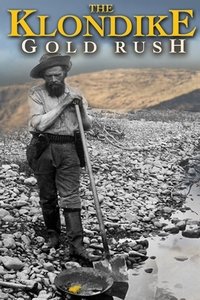
The Klondike Gold Rush (2015)
Renowned as the richest gold strike in North American mining history, the Klondike Gold Rush (1896-1899) set off a stampede of over 100,000 people on a colossal journey from Alaska to the gold fields of Canada's Yukon Territory. Filled with the frontier spirit, prospectors came and gave rise to what was one of the largest cities in Canada at that time - Dawson City. The boomtown, which became known as "the Paris of the North", earned the reputation as a place where lives could be revolutionized. Brought to life with excerpts from the celebrated book The Klondike Stampede - published in 1900 by Harper's Weekly correspondent Tappan Adney - and featuring interviews with award-winning author Charlotte Gray, and historians Terrence Cole and Michael Gates, The Klondike Gold Rush is an incredible story of determination, luck, fortune, and loss. In the end, it isn't all about the gold, but rather the journey to the Klondike itself.
poster
?
10
/1/

The Eyes of Children (1962)
Christmastime at the Roman Catholic-run Kamloops Indian Residential School in British Columbia.
poster
?
7.6
/55/
80
/1/
65
/4/

Killing the Indian in the Child (2021)
The Indian Act, passed in Canada in 1876, made members of Aboriginal peoples second-class citizens, separated from the white population: nomadic for centuries, they were moved to reservations to control their behavior and resources; and thousands of their youngest members were separated from their families to be Christianized: a cultural genocide that still resonates in Canadian society today.
poster
?
7.5
/65/
70
/1/
80
/2/

The Invisible Nation (2007)
The Algonquin once lived in harmony with the vast territory they occupied. This balance was upset when the Europeans arrived in the 16th century. Gradually, their Aboriginal traditions were undermined and their natural resources plundered. Today, barely 9,000 Algonquin are left. They live in about 10 communities, often enduring abject poverty and human rights abuses. These Aboriginal people are suffering the threat to their very existence in silence. Richard Desjardins and Robert Monderie have decided to sound the alarm before it's too late.
poster
?
73
/24/

Hatsumi (2012)
In Japanese, “shi kata ga nai” means “it can't be helped”. As a phrase, it represents the philosophical basis of the Japanese cultural reserve, through which adversity is never acknowledged. Nancy Okura is a Canadian of Japanese decent. During the Second World War, she was involuntarily removed from her home and relocated to an internment camp by the Government of Canada. Shi kata ga nai prevented Nancy Okura from ever speaking about her internment.
poster
?
100
/1/

The Crucible (2002)
Canada: A People's History - Episode 14: 1940 to 1946 CE. Canada comes of age in the anguish of World War II, with soldiers on the beaches at Dieppe and women in the industrial work force back home. The country's military role, and the domestic, social and political consequences of the war are traced through poignant stories of Canadians on both sides of the Atlantic. The horrific global conflict steals the innocence of a generation... but brings hope for a new future.
poster
?
7.0
/31/
10
/1/
10
/1/

Ikwe (1986)
A young Ojibwa girl from 1770 marries a Scottish fur trader and leaves home for the shores of Georgian Bay. Although the union is beneficial for her tribe, it results in hardship and isolation for Ikwe. Values and customs clash until, finally, the events of a dream Ikwe once had unfold with tragic clarity.
poster
?
7.7
/8/

European Tour '73 (2020)
A 15 minute documentary utilizing archival Super 8 film footage and original animation about a father fulfilling his dream of reconnecting his 5 small children to the steps of his own father when he fought for the Canadian military in WW2 through a trip to Europe in 1973.
poster
67
?
7.5
/130/
50
/3/
75
/2/

Action : The October Crisis of 1970 (1973)
A long and thoughtful look at those desperate days of October 1970, when Montréal awaited the outcome of FLQ terrorist acts. This film puts the October Crisis in the long perspective of history. Compiled from news and other films, it shows independence movements past and present, and their leaders; it reflects the mingled relief, dismay, defiance, when the Canadian army came to Montréal; and it shows how political leaders viewed the intervention.
poster
The Roku Channel
?
7.9
/51/
65
/4/

Is the Crown at war with us? (2003)
In the summer of 2000, federal fishery officers appeared to wage war on the Mi'gmaq fishermen of Burnt Church, New Brunswick. Why would officials of the Canadian government attack citizens for exercising rights that had been affirmed by the highest court in the land? Alanis Obomsawin casts her nets into history to provide a context for the events on Miramichi Bay.
poster
52
?
6.4
/441/
40
/2/
50
/10/

Bethune: The Making of a Hero (1993)
True story of Norman Bethune, a medical doctor who fought for justice in China during Mao's rise to power.
poster
?

1910: The Uncovering
For many years the only transportation link across Canada was one railway line. This tenuous, nation-building ribbon of steel was built through high, snowy, and unpredictable mountains. The tragic avalanche that occurred at the Rogers Pass summit in March of 1910 remains Canada's deadliest. 58 railway workers, majority Japanese died while attempting to clear a snow slide from the tracks when another larger avalanche struck from the other side in the middle of the dark night. This documentary project also delves into the lives of two unlikely friends today, a downtown Vancouver businessman, and a Japanese-born ski guide brought together by their need for purpose, healing, and a shared passion for researching the mysteries and injustices of this event. During production, the team was surprised with a visit by a 1910 victim’s great grandson from Tokyo.
poster
?

Light to Starboard (1972)
This film presents the historical development of lighthouses in Canada, and shows the conversion from keeper-maintained lights to automated equipment.
poster
Kanopy
?

Box of Treasures (1983)
In 1921 the Kwakiut'l people of Alert Bay, British Columbia, held their last secret potlatch. In 1980 at Alert Bay, the U'mista Cultural Centre (U'mista means "something of great value that has come back") opened its doors to receive and house the cultural treasures which were seized decades earlier and only then returned to the people. The center also took up activities such as recording stories told by elders so that some part of the past would always be alive and teaching children about their heritage in order to make them feel connected to their ancestors. This film documents the cultural significance of these events for today's Kwakiut'l people. It is an eloquent testimony to the persistence and complexity of Kwakiut'l society and to the struggle for redefining cultural identity for them.
poster
?

Twilight of an Era (1934-1939) (1960)
This documentary examines some of the important events in Canada during the Depression years: the Moose River mine disaster, the great drought on the prairies and the introduction of a transatlantic air service between Canada and Europe. The film also looks at the major world events that influenced Canada: the abdication of the king of England; civil war in Spain; Hitler's rise to power and Canada's declaration of war on Germany. Part of the Between Two Wars series.
poster
?

Gentleman Bandit (2024)
Documentary on the Canadian career of train robber Billy Miner, who became a folk hero in British Columbia. Locations near Kamloops and Mission are explored in present day.
poster
?

The Ballad of Ginger Goodwin (2024)
Documentary on BC labor activist Ginger Goodwin, his career as a striker, anti-war efforts, and assassination. Explores locations around Cumberland and the West Kootenays in present day.
poster
?

A Man of Conscience (1997)
The story of Morris Saxe, one man whose actions left their mark not only on the business and agricultural life of Ontario, but on the conscience of Canada. The determination and generosity that made Saxe "a man of conscience" are examined through the eyes of his grandson. Born in 1878, Saxe founded the Federated Jewish Farmers of Ontario. He rescued 79 Jewish orphans from Europe and brought them to Canada.
poster
?

Wings of Honour (2024)
A feature-length documentary from Canadian Geographic Films, and presents a powerful and emotional story celebrating the 100-year history of the Royal Canadian Air Force (RCAF). Through its backdrop of rarely seen RCAF archival footage and dramatic contemporary footage, the film showcases compelling stories from past and present RCAF members from across Canada.
poster
?

Surviving Eugenics (2015)
Surviving Eugenics is a documentary about the history and ongoing significance of eugenics. Anchored by survivor narratives from the province of Alberta in Canada, which had eugenic sterilization actively in place until 1972, Surviving Eugenics provides a unique insiders' view of life in institutions for the 'feeble-minded', and raises broader questions about disability, human variation, and contemporary social policies.
poster
?

Threads That Tie Us: An Oshwal Odyssey (2024)
The Halari Oshwals are a small community dispersed around the world yet held together by a history of sacrifices. But times have changed. This globalization has led to many problems within the community, and their numbers are dwindling. An Oshwal woman from Canada worries about the preservation and survival of her heritage in the hands of generations to come. She sets out on a pilgrimage to visit Oshwal communities in Kenya, where she was born; the UK, where she lived for a while; and India, where her parents originated. She discovers a shared concern for the future of the community and its traditions in the face of globalization and geographical disconnect, and explores what this means for the younger generation and their Oshwal identity.
poster
?

Africville: Can't Stop Now (2009)
Located on the northern shore of Bedford Basin, Africville was home to the many African-Canadian families who lived there for generations. In the 1960s, the city of Halifax expropriated Africville and residents were forced to leave their homes and businesses behind. Today, former residents of Africville are fighting for reparations and an official apology.
poster
?

Thrown into Canada (2022)
This documentary explores the history of Canada’s first major migration of non-European and non-white refugees who arrived in 1972 when Ugandan President Idi Amin expelled all South Asians from the country. Their story of struggle and hope became part of Canada’s conversations about refugees and cultural pluralism, and informed the Canadian response to future refugee movements.
poster
?

Rendezvous Canada, 1606 (1988)
The dramatic story of two youths--one French and one Indigenous--who share a pivotal time in Canada's history: the first contact between European and First Nations peoples.
poster
?

First Journey, Fort William (1987)
Set in 1815, this is the dramatic story of a child of the fur trade, son of a Native mother and a Scottish-Canadian fur trader. John Mackenzie's father is a wintering partner of the Montréal-based North West Company, which was for decades the wealthiest merchant enterprise in North America. To mark his entry into adulthood, twelve-year-old John is travelling for the first time to Fort William, the Company's lavish winter headquarters by Lake Superior. In following his journey, the film reveals the complex network of people--Scottish, French and Native Canadian--that made up fur-trading society and gave a unique flavor to the opening up of Canada's northwest.
poster
?

Potlatch...a strict law bids us dance (1975)
Presents the history of the conflict between the Canadian government and the Kwakiutl Indians of the Northwest Pacific over the ritual of the Potlatch. Archival photographs and films, wax roll sound recordings, police reports, the original potlatch files, and correspondence of agents form the basis of the reconstruction of period events, while the film centres on a Potlatch given today by the Cranmer family of Alert Bay.
poster
?

Jacques Cartier, un Malouin au Canada (2021)
N/A
poster
?

The Fallen Feather: Indian Industrial Residential Schools and Canadian Confederation (2007)
Between 1879 and 1986, upwards of 100,000 children in Canada were forcibly removed and placed into Indian Industrial Residential Schools. Their unique culture was stripped away to be replaced with a foreign European identity. Their family ties were cut, parents were forbidden to visit their children, and the children were prevented from returning home.
poster
?

For Twenty Cents A Day (1979)
A film documenting work shortages during the Depression of the 1930s and the attempts to deal with the unemployed, in particular young men. The film discusses the establishment of relief camps and projects, where men were paid twenty cents per day; the founding of organizations such as the Co-operative Commonwealth Federation (CCF), Workers' Unity League, and Relief Camp Workers' Union; general unionization and protest of the unemployed, including the On To Ottawa Trek, Regina Riot, sit-in strike from May to June 1938 at the Vancouver Main Post Office, Vancouver Art Gallery and Hotel Georgia, and the resulting Bloody Sunday of June 19.


mdblist.com © 2020 | Contact | Reddit | Discord | API | Privacy Policy