mdblist.com logo Movie Search


Ratings
Between
and
Between
and
Between
and
With at least
votes
Between
and
With at least
votes
Between
and
With at least
votes
Between
and
With at least
votes
Between
and
With at least
votes
Between
and
With at least
votes
Between
and
With at least
votes
Between
and
With at least
votes
Additional filters
m
Lists, Streaming Services, Cast and more
Create List (5 items)

Login to create a dynamic list


poster
?
7.3
/14/
87
/3/

Grotte Chauvet - Dans les pas des artistes de la Préhistoire (2024)
N/A
poster
?
6.5
/25/
80
/1/

Thorin, le dernier Néandertalien (2024)
The Mandrin Cave in the Rhône Valley is a fascinating excavation site. Archaeologist Ludovic Slimak discovered fossils and flints here, proving that Neanderthals inhabited the cave for over 80,000 years. The first Neanderthal in France for half a century was also unearthed in the cave: He was given the name Thorin.
poster
?
80
/1/

Sapiens ou la naissance de l’art (2022)
We immerse ourselves in a quest for the origins of Art, among the very first modern humans. The prehistoric works, of incredible richness and diversity, tell a story of beauty and the species. Researchers, including archaeologists, but also art historians, philosophers and contemporary artists, enrich our view of prehistoric art with their different, but also complementary, points of view on the subject.
poster
Curiosity Stream
73
?
7.6
/315/
70
/26/
76
/9/

Out of the Cradle (2018)
How did humanity's earliest ancestors evolve into one of the most successful species on Earth? An extraordinary journey tracing the footsteps of early hominids. Using the latest paleoanthropological findings mixed with the latest CGI from Square Enix, this story is finally told.
poster
?
cc age 13+

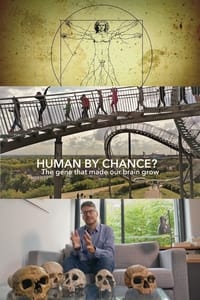
Human By Chance? (2020)
If we compare ourselves with our genetically closest living relatives, the chimpanzees, we have few physical advantages. We are far weaker, cannot move nearly as fast, and do not have the same climbing capabilities. Instead, humans excel in areas such as architecture, religion, science, language, writing, art, culture, and ideas. These achievements are due to our larger brain that contain billions of neurons. It was the rapid growth of our brain, originating about 2 million years ago, that allowed us to be the predominant species of the world. What caused this rapid growth of our cerebral cortex? Researchers worldwide have asked this question for many years, but now there finally seems to be an answer.


mdblist.com © 2020 | Contact | Reddit | Discord | API | Privacy Policy