mdblist.com logo Movie Search


Ratings
Between
and
Between
and
Between
and
With at least
votes
Between
and
With at least
votes
Between
and
With at least
votes
Between
and
With at least
votes
Between
and
With at least
votes
Between
and
With at least
votes
Between
and
With at least
votes
Between
and
With at least
votes
Additional filters
m
Lists, Streaming Services, Cast and more
Create List (18 items)

Login to create a dynamic list


poster
?
100
/1/

The Symptom
A middle-aged woman comes down with a mysterious illness that causes her to lose her breath and faint. She attempts to travel to a far hospital but must find a passenger to keep her awake.
poster
?
100
/1/

Hadj Nasreddine Dinet (2016)
Étienne Dinet, born March 28, 1861 in Paris, where he died on December 24, 1929, was a French painter and lithographer. Having lived much of his life in Algeria and recognized during his lifetime, he called himself Nasreddine Dinet after converting to Islam.
poster
?
100
/1/

نصر الدين ديني (1977)
Étienne Dinet (إتيان دينيه), born March 28, 1861 in Paris, where he died on December 24, 1929, was a French painter and lithographer. He was one of the leading representatives of Orientalist painting at the turn of the 19th and 20th centuries. Obtaining a scholarship in 1884, Dinet undertook his first trip to southern Algeria in the region of Bou-Saâda, the Naili culture having a profound impact on him, as he would return there many times until he settled in his first Algerian studio in Biskra in 1900. In 1905, he bought a house in Bou-Saâda to spend three-quarters of the year there. In 1907, on his advice, the Villa Abd-el-Tif was created in Algiers, modeled on the Villa Medici in Rome. Having lived much of his life in Algeria, he called himself Nasreddine Dinet (نصر الدين ديني) after converting to Islam. On January 12, 1930, he was buried in the Bou-Saâda cemetery, where a museum that houses many of his works bears his name.
poster
?
100
/1/

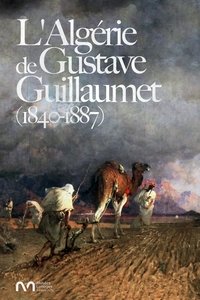
L'Algérie de Gustave Guillaumet (1840-1887) (2018)
Born on March 25, 1840, Gustave Guillaumet discovered Algeria by chance when he was about to embark for Italy. Over the course of his ten or eleven trips and extended stays, he established a familiarity with this space. Traveling through the different regions from north to south, he never ceases to note the differences. He is also the first artist, apart from Delacroix's Women of Algiers, to penetrate into female interiors and reveal the reality, far removed from the harem fantasies that reigned in his time. Fascinated by the country, its deserts and its inhabitants , going so far as to live like the Algerians, Gustave Guillaumet devoted his life and his painting to this country, breaking with the colorful and exotic representations of the time. The painting The Famine in Algeria, restored thanks to exceptional fundraising, was dictated by the events of the years 1865-1868, and well illustrates his knowledge of the country, in a manner that is at once demanding, sensitive and serious.
poster
?
100
/1/

L'Orientalisme (2019)
Orientalism is a literary and artistic movement born in Western Europe in the 18th century. Through its scale and popularity, throughout the 19th century, it marked the interest and curiosity of artists and writers for the countries of the West (the Maghreb) or the Levant (the Middle East). Orientalism was born from the fascination of the Ottoman Empire and followed its slow disintegration and the progression of European colonizations. This exotic trend is associated with all the artistic movements of the 19th century, academic, romantic, realistic or even impressionist. It is present in architecture, music, painting, literature, poetry... Picturesque aesthetics, confusing styles, civilizations and eras, orientalism has created numerous clichés and clichés that we still find today in literature or cinema.
poster
?
50
/2/

Seekers of Oblivion (2004)
Seekers of Oblivion explores the exciting life and adventures of Isabelle Eberhardt. Born in Geneva, Switzerland in 1877, Isabelle left Europe for North Africa at a young age. While there, she consorted with tramps, prostitutes, soldiers, murderers and thieves, at times masquerading as a man in orde.
poster
Kanopy
?
20
/1/

Edward Said On Orientalism: "The Orient" Represented in Mass Media (1998)
Edward Said's book Orientalism has been profoundly influential in a diverse range of disciplines since its publication in 1978. In this engaging and lavishly illustrated interview he talks about the context within which the book was conceived, its main themes, and how its original thesis relates to the contemporary understanding of "the Orient" as represented in the mass media. "That's the power of the discourse of Orientalism. If you're thinking about people and Islam, and about that part of the world, those are the words you constantly have to use. To think past it, to go beyond it, not to use it, is virtually impossible, because there is no knowledge that isn't codified in this way about that part of the world." -Edward Said
poster
?
70
/1/

In the Shadow of the Harem (1928)
An emir wants revenge on a secretary who posed as a rival to a beautiful woman. He holds in his palace which refers to himself as a trap, the wife of the secretary, and thinks of becoming her lover. The charm and nobility of the young woman end up softening the emir. He bows, returns her to her husband, and forgives the beauty.
poster
?
5.7
/10/

Tourists (2017)
A reflection on tourism assembled out of amateur videos filmed by tourists during their trips.
poster
?
5.7
/25/
100
/1/

The Seventh Door (1947)
An old man about to die gives all his fortune to a young beggar he meets in an Arabian town. He takes him to his house (now the poor man's property) and he strongly advises him not to open one of the doors, the seventh door. "I could throw the key into the sea" says the young lad" No use, you'd dive to get it back". The young man is curious and he cannot resist temptation: he opens the forbidden door. A strange world is waiting for him where a girl, Leila, will be his guide .
poster
?
5.2
/52/
10
/1/

The Seven Tasks of Ali Baba (1962)
A wizard summons Ali Baba to transport a sacred crown to a nearby country. An evil ruler has taken over the land, and the crown is needed to free the people from his influence.
poster
?
7.9
/22/
80
/1/
80
/1/

Delacroix, d'orient et d'occident (2018)
N/A
poster
?
8.3
/47/
100
/1/
70
/3/
100
/5/
100
/3/

Edward Said: The Last Interview (2004)
Edward Said, Professor of English & Comparative Literature at Columbia University, was a prominent literary critic of the late 20th century and a leading spokesperson for the Palestinian cause in the US. Born to a Palestinian family in Al-Quds (Jerusalem) in 1935, he and his family were dispossessed in 1948 and settled in Cairo. Educated in the US, he lived in New York for many years. Said was a member of the Palestine National Council. After resigning from the PNC in 1991, Said wrote critically about the post-Oslo peace process, the political failures of Yasser Arafat and the PLO. Said was diagnosed with leukemia in 1991 and struggled with the disease while continuing to write and teach. He stopped giving interviews but made an exception less than a year before his death in 2003, speaking about his illness, work, Palestine, politics, life, and education. The last interview is the final testament of this passionately committed intellectual.
poster
41
?
5.2
/137/
25
/2/
47
/3/

1001 Nights (1968)
Omar and his friend, Ali, returning to Moorish Granada after several years in the Middle East, discover that an evil usurper is now in power. With the help of a female genie, Omar sets about restoring freedom and justice.
poster
?
7.9
/29/
57
/3/

Arab Camera (1987)
Focusing on key Arab films produced in the last 20 years. Férid Boughedir traces the development of the film-makers' concern to produce more socially aware cinema. Themes include the issue of Palestinian homeland rights and the nature of Arab identity. The film-makers also share a desire to develop a strong poetic tradition.
poster
?
67
/4/

The Shadow of the West (1983)
Edward Said, Professor of English & Comparative Literature at Columbia University, was one of the most prominent literary critics of the late 20th century and a leading spokesperson for the Palestinian cause in the US. In this episode, Said examines Western attitudes to the Arabs and finds their origins in the Crusades, Hollywood and European empire building. He sees the Palestinian fate as the result of years of Western interference. One of the ten episodes of The Arabs: A Living History.
poster
?
60
/1/

Bolshoi Ballet: Le Corsaire (2012)
Inspired by Lord Byron’s epic poem, this jewel of the repertoire boasts a lavish production complete with a shipwreck, pirates, and some of ballet’s most renowned scenes.
poster
?

KWAIDAN (2022)
N/A


mdblist.com © 2020 | Contact | Reddit | Discord | API | Privacy Policy