mdblist.com logo Movie Search


Ratings
Between
and
Between
and
Between
and
With at least
votes
Between
and
With at least
votes
Between
and
With at least
votes
Between
and
With at least
votes
Between
and
With at least
votes
Between
and
With at least
votes
Between
and
With at least
votes
Between
and
With at least
votes
Additional filters
m
Lists, Streaming Services, Cast and more
Create List (36 items)

Login to create a dynamic list


poster
Criterion Channel
80
59
7.0
/993/
64
/30/
70
/28/
3.9
/5754/
100
/6/
100

Sambizanga (1973)
Domingos is a member of an African liberation movement, arrested by the Portuguese secret police, after bloody events in Angola. His wife goes from a prison station to another, trying in vain to find out where he is.
poster
66
32
6.2
/301/
70
/24/
66
/28/
3.3
/9800/

Fanon (2025)
Frantz Fanon, a French psychiatrist from Martinique, has just been appointed head of department at the psychiatric hospital in Blida, Algeria. His methods contrast with those of the other doctors in a context of colonization. A biopic in the heart of the Algerian war where a fight is waged in the name of Humanity.
poster
72
28
7.3
/802/
65
/20/
64
/23/
3.9
/1747/
83
/3/

Chronicle of the Years of Fire (1975)
A meticulous chronicle of the evolution of the Algerian national movement from 1939 until the outbreak of the revolution on November 1, 1954, the film unequivocally demonstrates that the "Algerian War" is not an accident of history, but a slow process of suffering and warlike revolts, uninterrupted, from the start of colonization in 1830, until this "Red All Saints' Day" of November 1, 1954. At its center, Ahmed gradually awakens to political awareness against colonization, under the gaze of his son, a symbol of the new Algeria, and that of Miloud, half-mad haranguer, half-prophet, incarnation of Popular memory of the revolt, the liberation of Algeria and its people.
poster
Kanopy
59
14
6.5
/245/
63
/10/
70
/8/
3.4
/1303/
33
/1/

Frantz Fanon: Black Skin, White Mask (1996)
Explores the life and work of the psychoanalytic theorist and activist Frantz Fanon who was born in Martinique, educated in Paris and worked in Algeria. Examines Fanon's theories of identity and race, and traces his involvement in the anti-colonial struggle in Algeria and throughout the world.
poster
Criterion Channel
69
12
6.6
/81/
80
/2/
60
/2/
3.5
/1088/

True Chronicles of the Blida Joinville Psychiatric Hospital in the Last Century, when Dr Frantz Fanon Was Head of the Fifth Ward between 1953 and 1956 (2025)
1953, colonized Algeria. Fanon, a young black psychiatrist is appointed head doctor at the Blida-Joinville Hospital. He was putting his theories of ‘Institutional Psychotherapy’ into practice in opposition to the racist theories of the Algies School of Psychiatry, while a war broke out in his own wards.
poster
64
10
6.6
/96/
57
/7/
66
/6/
3.5
/598/

Monangambeee (1968)
Filmmaker-griot coming from the theater, it was with a camera, while the war in Vietnam occupied everyone's minds, that Sarah Maldoror gave visibility to the African wars of decolonization: Angola, Guinea Bissau, French Guinea, Cape Verde... Her short film Monangambée addresses the torture by the Portuguese army of a sympathizer of the Angolan resistance. At the end of editing, Sarah Maldoror approached the members of the Art Ensemble of Chicago during a Parisian concert and offered to add sound to her film. The next day they watched the film, were convinced and recorded their first soundtrack for free as evidence of African-American solidarity. Shot in Algiers, Monangambée is a film about torture and, more broadly, about the incomprehension between the colonized and the colonizers. It is based on a novel by the Angolan writer Luandino Vieira, then imprisoned by the Portuguese colonial power.
poster
?
10
/1/
100
/1/

Archie Shepp chez les Touaregs (1969)
N/A
poster
?
10
/1/
100
/1/

July Dust (1967)
“Poussières de Juillet”, produced in 1967 by Hachemi El-Chérif, is taken from a poem by Kateb Yacine. "We made a film on the return of the ashes of Emir Abdelkader, to Algeria. It was the opportunity to make a film on the ancestors with M'hamed Issiakhem. He designed glass plates on the basis of my texts. Then we had actors collaborate. It was a film which cost us a total of 300 dinars, proof that we could do work for television without too much money. We won two first international prizes at the Belgrade festival. We left the original of the film with the Egyptians in Alexandria and they lost it. We kept a copy but over time I wonder what happened to it, because there is no not even had a screening, they say it still exists, but I don't know in what state." Kateb Yacine, July 28, 1986, interview with Arlette Casas.
poster
?
8.8
/12/
10
/1/
100
/2/

The Death Knell (1964)
At the beginning of the 1960s, in Salisbury (now Harare), in Southern Rhodesia (now Zimbabwe), the government of Ian Smith hanged three black revolutionaries who had nevertheless been pardoned by the Queen of England. René Vautier, with ZAPU (Zimbabwe African Party for Unity), denounces this killing. Expelled by the Rhodesian police (informed by the French secret services), the filmmaker shoots a film in Algeria in the form of an indictment against colonial savagery. The film was first banned in France, then authorized in 1965.
poster
?
100
/1/

Die weiße Gefahr (1971)
N/A
poster
?
10
/1/

Marcus Garvey: Toward Black Nationhood (1984)
A documentary, combining archival material and live interviews with Marcus Garvey, Jr., and others, which introduces the life and work of the pioneer Black nationalist leader Marcus Garvey.
poster
?
100
/1/

L'Avenir est ailleurs (2007)
N/A
poster
?
100
/1/

Aimé Césaire, un Nègre fondamental (2007)
N/A
poster
Kanopy
?
6.9
/10/
20
/1/
100
/1/

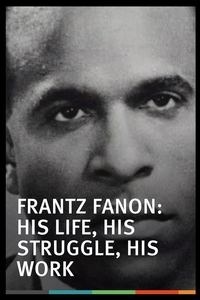
Frantz Fanon: His Life, His Struggle, His Work (2001)
It is the evocation of a life as brief as it is dense. An encounter with a dazzling thought, that of Frantz Fanon, a psychiatrist of West Indian origin, who will reflect on the alienation of black people. It is the evocation of a man of reflection who refuses to close his eyes, of the man of action who devoted himself body and soul to the liberation struggle of the Algerian people and who will become, through his political commitment, his fight, and his writings, one of the figures of the anti-colonialist struggle. Before being killed at the age of 36 by leukemia, on December 6, 1961. His body was buried by Chadli Bendjedid, who later became Algerian president, in Algeria, at the Chouhadas cemetery (cemetery of war martyrs ). With him, three of his works are buried: “Black Skin, White Masks”, “L’An V De La Révolution Algérien” and “The Wretched of the Earth”.
poster
?
10
/1/
100
/1/

Le Serment (1963)
The Oath, a TV film produced by Algerian television in 1963 following the end of the war of independence, tells the story of young Algerians who joined the resistance after the bloody repressions of May 1945 in Constantinois by the French colonial army .
poster
?
100
/1/

Algérie Tours Détours (2007)
A documentary road movie with René Vautier In the aftermath of Algeria's independence, René Vautier, a militant filmmaker, considered "the dad" of Algerian cinema, set up the cine-pops. We recreate with him the device of itinerant projections and we travel the country in ciné-bus (Algiers, Béjaïa, Tizi Ouzou, Tébessa) to hear the voices of the spectators on the political situation, youth and living conditions of men and Of women today.
poster
?
100
/1/

Gates of Silence (1987)
In 1955, what was known as the "Algerian War" gradually escalated into all-out war, and the French army inexorably transformed into a soldiery accustomed to colonial humiliation and massacres. Amar is a young deaf and mute man who wants to join the resistance, but he is rejected because of his disability, despite all the training he received from his father, who was an expert in hunting and horses. The raid on his village, which he watches helplessly, drives him to seek revenge, he who had until then been locked away in "The Gates of Silence."
poster
?
10
/1/
90
/1/

So that Algeria May Live (1972)
Collectively made Algerian film.
poster
?
100
/1/

Les Enfants de Novembre (1975)
In the streets of the Casbah of Algiers, an FLN fighter pursued by the colonial police hands over confidential documents to Mourad, an Algerian child shouting newspapers who must at all costs pass them on to the resistance. But the police are on their trail and will do anything to get them back.
poster
?
10
/1/
100
/1/

Batouk (1968)
This uneven and uninspired documentary of Africa is a collection from various stock footage. Female dancers in mod clothes dance on the Eiffel Tower in comparison to the primitive dances of native Africans. A lone runner trains for a marathon, and a few animals are shown in their natural habitat. Commentary and modern jazz and pop music help to make this seem much longer than 66 minutes.
poster
?
100
/1/

Hier, aujourd'hui et demain (2010)
N/A
poster
?
20
/1/
100
/1/

René Vautier, le maquisard à la caméra (2000)
N/A
poster
?
8.7
/7/
20
/1/
100
/1/

René Vautier, le rebelle (2000)
N/A
poster
74
?
6.3
/25/
90
/1/
65
/2/
3.5
/211/

And the Dogs Were Silent (1976)
For 'Et les chiens se taisaient' Maldoror adapted a piece of theatre by the poet and politician Aimé Césaire (1913–2008), about a rebel who becomes profoundly aware of his otherness when condemned to death. His existential dialogue with his mother reverberates around the African sculptures on display at the Musée de l'Homme, a Parisian museum full of colonial plunder whose director was the Surrealist anthropologist Michel Leiris.
poster
?
100
/1/

Dead the Long Night (1979)
Composed of archive images narrated by the writer, anthropologist and linguist Mouloud Mammeri, the film offers a reflection on the anti-colonialist and anti-imperialist struggle movements of the 1970s around the world.
poster
?
10
/1/
100
/1/

El Fidayoune (1971)
In the midst of the Algerian War in 1957, fighters (fidayounes) resisted French intervention with the help of a doctor.
poster
?
10
/1/
100
/1/

Stories of the Revolution (1969)
The film recounts in three parts by three different directors the Algerian people's struggle for independence after 130 years of French colonization: Ahmed Bedjaoui "Les Fedayines," Rabah Laradji "La Bombe," Sid Ali Mazif "Le Messager."
poster
?
100
/1/

In The Footsteps Of Frantz Fanon (2021)
Who was Frantz Fanon, the author of Wretched of the Earth and Black Skin, White Masks, this Pan-African thinker and psychiatrist engaged in anti-colonialist struggles? Born in Martinique, Frantz Fanon was not yet 20 years old when he landed, weapons in hand, on the beaches of Provence in August 1944 with thousands of soldiers from "Free France", most of whom had come from Africa, to free the country from Nazi occupation. He became a psychiatrist and ten years later joined the Algerians in their fight for independence. Died at the age of 36, he left behind a major work on the relationships of domination between the colonized and the colonizers, on the roots of racism and the emergence of a thought of a Third World in search of freedom. 60 years after his death, the film follows in the footsteps of Frantz Fanon, alongside those who knew him, to rediscover this exceptional man.
poster
?
9.1
/9/
10
/1/
90
/2/

Guerre aux images en Algérie (1985)
N/A
poster
?
9.2
/13/
10
/1/
90
/2/

Déjà le sang de mai ensemençait novembre (1982)
The essay by René Vautier, "Déjà le sang de Mai ensemençait Novembre", starts with the recapitulation of the representations of Algeria throughout the history of visual arts in France in an effort to explore the causes for the quest for independence.
poster
?
100
/1/

Papa Césaire (2009)
Shortly after his death in 2008, Maldoror made this film about her longtime friend and collaborator, the Négritude poet Aimé Césaire. In this film, she retraces the steps of Césaire’s travels across the globe — particularly back to his hometown in Martinique, where Maldoror interviews his relatives about his life — and her working relationship with Césaire, including fragments of her previous films about him, Un homme, une terre (1976) and Le masque des mots (1987).
poster
?
10
/1/
100
/1/

Black Sweat (1971)
During French colonization, a young Algerian boy is expelled from the French high school where he is able to study thanks to his father's position in the village. For his father, whose dream is to see his son climb the social ladder, this is a disaster, and the young man decides to go to work in the mines. A general strike that is severely repressed makes him aware of the class struggle, and he joins the resistance against discrimination and colonial oppression.
poster
?
7.2
/9/
100
/1/

Aimé Césaire, Un homme une terre (1976)
Alternating interview segments, shots of Martinique landscapes and scenes from Aimé Césaire's play La Tragédie du roi Christophe (1963), Sarah Maldoror portrays her friend as a politician, a poet, and a founder of the Négritude movement.
poster
?
7.6
/39/
10
/1/
76
/4/

The Zerda or the Songs of Forgetting (1983)
“La Zerda and the songs of oblivion” (1982) is one of only two films made by the Algerian novelist Assia Djebar, with “La Nouba des femmes du mont Chenoua” (1977). Powerful poetic essay based on archives, in which Assia Djebar – in collaboration with the poet Malek Alloula and the composer Ahmed Essyad – deconstructs the French colonial propaganda of the Pathé-Gaumont newsreels from 1912 to 1942, to reveal the signs of revolt among the subjugated North African population. Through the reassembly of these propaganda images, Djebar recovers the history of the Zerda ceremonies, suggesting that the power and mysticism of this tradition were obliterated and erased by the predatory voyeurism of the colonial gaze. This very gaze is thus subverted and a hidden tradition of resistance and struggle is revealed, against any exoticizing and orientalist temptation.
poster
64
?
6.5
/63/
47
/4/
84
/5/

Eldridge Cleaver, Black Panther (1970)
The portrait of Eldridge Cleaver, the "Minister of Information" for the Black Panthers movement, in exile in Algiers.
poster
?

Mudra-Afrique
Mudra Afrique, founded in 1977 in Dakar by Léopold Sédar Senghor and Maurice Béjart, was an important dance school that mixed traditional African dance with modern styles. Germaine Acogny, a skilled teacher, along with dancer, actress Irène Tassembédo and musician Doudou Rose Ndiaye, were key figures in the school. Their work helped Mudra Afrique leave a strong mark on African contemporary dance and music.


mdblist.com © 2020 | Contact | Reddit | Discord | API | Privacy Policy