mdblist.com logo Movie Search


Ratings
Between
and
Between
and
Between
and
With at least
votes
Between
and
With at least
votes
Between
and
With at least
votes
Between
and
With at least
votes
Between
and
With at least
votes
Between
and
With at least
votes
Between
and
With at least
votes
Between
and
With at least
votes
Additional filters
m
Lists, Streaming Services, Cast and more
Create List (30 items)

Login to create a dynamic list


poster
Kanopy
80
15
8.3
/416/
79
/20/
83
/8/
3.8
/562/

The Occupation of the American Mind (2016)
Over the past few years, Israel's ongoing military occupation of Palestinian territory and repeated invasions of the Gaza strip have triggered a fierce backlash against Israeli policies virtually everywhere in the world—except the United States. This documentary takes an eye-opening look at this critical exception, zeroing in on pro-Israel public relations efforts within the U.S.
poster
Kanopy
?
7.6
/46/
20
/1/

Advertising and the End of the World (1998)
Focusing directly on the world of commercial images, Sut Jhally asks some basic questions about the cultural messages emanating from this market-based view of the world: Do our present arrangements deliver what they claim -- happiness and satisfaction? Can we think about our collective as well as our private interests? And, can we think long-term as well as short-term?
poster
Kanopy
?
20
/1/
40
/1/

Playing Unfair (2002)
Sports media scholars look at the persistence of heterosexism and homophobia in perpetuating gender stereotypes. They argue for new media images which fairly and accurately depict the strength and competence of female athletes.
poster
Kanopy
?
6.0
/16/

Beyond the Straight and Narrow (2023)
How did the rise of LGBTQ visibility, political progress, and digital technologies in the 2000s come together to offer the abundance of complex queer and transgender representations we see today? Media scholar Katherine Sender shows how LGBTQ visibility and political progress have combined with new digital media technologies and television platforms to produce an increasingly complex range of queer and transgender representations.
poster
The Roku Channel
?
7.8
/21/
90
/1/

Behind the Shield: The Power and Politics of the NFL (2022)
Celebrated author and Nation magazine sports editor Dave Zirin tackles the myth that the NFL was somehow free of politics before Colin Kaepernick and other Black NFL players took a knee.
poster
Kanopy
?
8.2
/17/

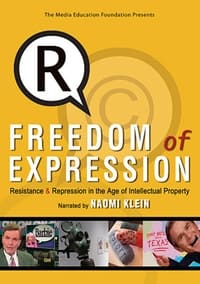
Freedom of Expression: Resistance & Repression in the Age of Intellectual Property (2007)
In 1998, university professor Kembrew McLeod (Associate Professor of Communication Studies at the University of Iowa) trademarked the phrase "freedom of expression" - a startling comment on the way that intellectual property law restricts creativity and expression of ideas. This provocative and amusing documentary explores the battles being waged in courts, classrooms, museums, film studios, and the Internet over control of our cultural commons. Based on McLeod's award-winning book of the same title, Freedom of Expression charts the many successful attempts to push back this assault by overzealous copyright holders. Freedom of Expression is an essential tool for educators, activists, filmmakers, students, artists, librarians, and more.
poster
?
65
/5/

Tough Guise 2 (2013)
In this highly anticipated update of the influential and widely acclaimed Tough Guise, pioneering anti-violence educator and cultural theorist Jackson Katz argues that the ongoing epidemic of men's violence in America is rooted in our inability as a society to move beyond outmoded ideals of manhood.
poster
Kanopy
?
6.1
/44/

Pornland (2014)
An examination of the modern pornography industry and its affect on culture.
poster
Kanopy
?
80
/1/

The Mean World Syndrome (2010)
For years, debates have raged among scholars, politicians, and concerned parents about the effects of media violence on viewers. Too often these debates have fallen into simplistic battles between those who claim that media images directly cause violence and those who argue that activists exaggerate the impact of media exposure. Based on interviews conducted with George Gerbner before his death in 2005, the film urges us to think about media effects in more nuanced ways. In contrast to behaviorist models that see media violence as causing real-world violence, and limited effects models that question the impact of media altogether, Gerbner encourages us to move outside the frame of this debate to consider how the repetitive stories media tell constitute a pervasive cultural environment - a landscape of ritualized, often violent images that have the power to cultivate how we see and understand the world.
poster
Kanopy
?
20
/1/

Behind the Screens, Hollywood Goes Hypercommercial (2000)
Hollywood movies are rapidly becoming vehicles for the ulterior marketing and advertising motives of studios and their owners, rather than entertainment in their own right. Behind the Screens explores this trend toward "hypercommercialism" through phenomena such as product placement, tie-ins, merchandising and cross-promotions. It combines multiple examples taken directly from the movies with incisive interviews provided by film scholars, cultural critics, political economists, and an Oscar-nominated screenwriter. Behind the Screens presents an accessible argument designed for school and college-age audiences-- precisely the demographic most prized by both Hollywood studios and advertisers alike. It features examples drawn from movies such as Wayne's World, Forrest Gump, The Lion King, Summer of Sam, and Toy Story.
poster
61
?
7.7
/265/
50
/5/
57
/7/

Killing Us Softly 3: Advertising's Image of Women (2000)
Jean Kilbourne's pioneering work helped develop and popularize the study of gender representation in advertising. Her award-winning Killing us Softly films have influenced millions of college and high school students across two generations and on an international scale. In this important new film, Kilbourne reviews if and how the image of women in advertising has changed over the last 20 years. With wit and warmth, Kilbourne uses over 160 ads and TV commercials to critique advertising's image of women. By fostering creative and productive dialogue, she invites viewers to look at familiar images in a new way, that moves and empowers them to take action.
poster
?
6.9
/84/
70
/3/
65
/7/

The Codes of Gender (2010)
Arguing that advertising not only sells things, but also ideas about the world, media scholar Sut Jhally offers a blistering analysis of commercial culture's inability to let go of reactionary gender representations. Jhally's starting point is the breakthrough work of the late sociologist Erving Goffman, whose 1959 book The Presentation of the Self in Everyday Life prefigured the growing field of performance studies. Jhally applies Goffman's analysis of the body in print advertising to hundreds of print ads today, uncovering an astonishing pattern of regressive and destructive gender codes. By looking beyond advertising as a medium that simply sells products, and beyond analyses of gender that tend to focus on either biology or objectification, The Codes of Gender offers important insights into the social construction of masculinity and femininity, the relationship between gender and power, and the everyday performance of cultural norms.
poster
Kanopy
69
?
6.8
/136/
71
/8/
3.4
/213/

White Like Me (2013)
In White Like Me, anti-racist educator Tim Wise explores race and racism in the US through the lens of whiteness and white privilege.
poster
?
43
/3/

Game Over: Gender, Race & Violence in Video Games (2000)
Video and computer games represent a $6 billion a year industry. One out of every ten households in American owns a Sony Playstation. Children who own video game equipment play an average of ten hours per week. And yet, despite capturing the attention of millions of children worldwide, video games remain one of the least scrutinized cultural industries. Game Over is the first educational documentary to address the fastest growing segment of the media through engaging questions of gender, race and violence. Game Over offers a refreshing dialogue about the complex and controversial topic of video game violence, and is designed to encourage high school and college students to think critically about the video games they play. - See more at: http://www.mediaed.org/cgi-bin/commerce.cgi?preadd=action&key=205#sthash.f6Cram5T.dpuf
poster
Kanopy
?
7.0
/9/
60
/2/
80
/1/

Stuart Hall: Representation & the Media (1997)
Cultural theorist Stuart Hall offers an extended meditation on representation. Moving beyond the accuracy or inaccuracy of specific representations, Hall argues that the process of representation itself constitutes the very world it aims to represent, and explores how the shared language of a culture, its signs and images, provides a conceptual roadmap that gives meaning to the world rather than simply reflecting it. Hall's concern throughout is the centrality of culture to the shaping of our collective perceptions, and how the dynamics of media representation reproduce forms of symbolic power.
poster
Kanopy
?
65
/2/

The Man Card (2020)
For years, right-wing politicians and pundits have repeatedly criticized the left for playing “the race card” and “the woman card.” This new film turns the tables and takes dead aim at the right’s own longstanding – but rarely discussed – deployment of white-male identity politics in American presidential elections. Ranging from Richard Nixon’s tough-talking, law-and-order campaign in 1968 to Donald Trump’s hyper-macho revival of the same fear-based appeals in 2020, "The Man Card" shows how the right has mobilized dominant ideas about manhood and enacted a deliberate strategy to frame Democrats and liberals as soft, brand the Republican Party as the party of “real men,” and position conservatives as defenders of white male power and authority in the face of transformative demographic change and ongoing struggles for racial, gender, and sexual equality.
poster
Kanopy
?
80
/1/

Advertising at the Edge of the Apocalypse (2018)
In this highly anticipated sequel to his groundbreaking, ADVERTISING AND THE END OF THE WORLD, media scholar Sut Jhally explores the devastating personal and environmental fallout from advertising, commercial culture, and rampant American consumerism. Ranging from the emergence of the modern advertising industry in the early 20th century to the full-scale commercialization of the culture today, Jhally identifies one consistent message running throughout all of advertising: the idea that corporate brands and consumer goods are the keys to human happiness. He then shows how this powerful narrative, backed by billions of dollars a year and propagated by the best creative minds, has blinded us to the catastrophic costs of ever-accelerating rates of consumption.
poster
59
?
8.1
/19/
20
/1/
3.8
/227/

bell hooks: Cultural Criticism & Transformation (1997)
bell hooks is one of America's most accessible public intellectuals. In this two-part video, extensively illustrated with many of the images under analysis, she makes a compelling argument for the transformative power of cultural criticism.
poster
?
60
/1/

You Throw Like a Girl: The Blind Spot of Masculinity
NFL veteran Don McPherson examines how definitions of masculinity adversely affect women and create "blind spots" that hinder the healthy development of men. Using examples from his own life, and generously illustrated with clips from motion pictures, McPherson leads us beyond the blind spots of traditional masculinity and toward solutions that engage men in dialogue.
poster
?
3.9
/37/

Flirting with Danger: Power & Choice in Heterosexual Relationships (2012)
Social and developmental psychologist and author Lynn Phillips explores the line between consent and coercion in this thought-provoking look at popular culture and the ways real girls and women navigate their heterosexual relationships and hookups.
poster
?
60
/1/

Digital Disconnect (2018)
In this era of Facebook privacy breaches, "fake news" and filter bubbles, this essential film trains its sights on the relationship between the internet and democracy. Tracing the internet's history as a publicly funded government project in the 1960s to its full-scale commercialization today, the film traces how the revolutionary, democratizing potential of the internet has been radically compromised by the growing and unaccountable power of a handful of telecom and tech monopolies.
poster
?
6.6
/37/
50
/1/

The Great White Hoax
THE GREAT WHITE HOAX, featuring acclaimed anti-racist educator and author Tim Wise, explores how American political leaders of both parties have been tapping into white anxiety, stoking white grievance, and scapegoating people of color for decades to divide and conquer working class voters and shore up political support.
poster
?

Money for Nothing: Behind the Business of Pop Music (2001)
The hallmarks of popular music - artist independence and diversity of voices - are threatened by a contracting marketplace of record companies, radio ownership and playlists, as well as increased use in advertising. Big-name artists, historians and economists explain how popular music is produced and marketed and critique its current state.
poster
Kanopy
?

Edward Said: The Myth of "The Clash of Civilizations” (1998)
In this important lecture delivered at the University of Massachusetts, Edward Said takes aim at one of the central tenets of recent foreign policy thinking -- that conflicts between different and "clashing civilizations" (Western, Islamic, Confucian) characterize the contemporary world. "The real question is whether in the end we want to work for civilizations that are separate, or whether we should be taking the more integrative, but perhaps more difficult path, which is to see them as making one vast whole, whose exact contours are impossible for any person to grasp, but whose certain existence we can intuit and feel and study." - Edward Said
poster
Kanopy
?

A Burning Question (2012)
This fascinating and clarifying look at the debate surrounding global warming explores the striking disconnect between the relatively clear-cut concerns of the world's most prominent scientists and the maze of speculation, rhetorical posturing, and outright misinformation that attaches to this issue whenever it's taken up by politicians, PR specialists, and political pundits. Mixing a localized focus on Ireland with insights from scientists and leaders from around the world, the film serves as both a primer on climate science and a penetrating analysis of media framing and the science of perception management. An excellent resource for courses in science, environmental studies, global politics, and media.
poster
Kanopy
?

Girls: Moving Beyond Myth (2004)
This compelling new documentary focuses on the sexual dilemmas and difficult life choices young girls face as they come of age in contemporary American culture. Challenging long-held myths about girlhood, the film draws on the insights of girls themselves to explore and shed light on their actual lived experience as they navigate our increasingly hyper-sexualized society.
poster
?

Howard Zinn's Emma
Emma dramatizes the life of Emma Goldman, the famed anarchist, feminist, and free-spirited thinker who was exiled from the United States because of her outspoken views, including her opposition to World War I. Filmed live in 2005 at the Byrdcliffe Theatre in Woodstock, New York, with Zinn in attendance, the play draws on Goldman’s influential autobiography, speeches, and political writings to trace her emergence as one of the foremost radical intellectuals and dissident activists in America in the early part of the 20th century. Emma shows us why Emma Goldman was not only a remarkable historical figure but a woman whose fierce wit and political courage continue to resonate today.
poster
?

The Bystander Moment: Transforming Rape Culture at its Roots (2018)
The #MeToo movement has shined much-needed light on the pervasiveness of sexual harassment and abuse and created unprecedented demand for gender violence prevention models that actually work. THE BYSTANDER MOMENT tells the story of one of the most prominent and proven of these models - the innovative bystander approach developed by pioneering scholar and activist Jackson Katz and his colleagues at Northeastern University's Center for the Study of Sport in Society in the 1990s.
poster
Kanopy
?

Rich Media, Poor Democracy (2003)
Robert McChesney lays the blame for the US's current state of affairs squarely at the doors of the corporate boardrooms of big media, which far from delivering on their promises of more choice and more diversity, have organized a system characterized by a lack of competition, homogenization of opinion and formulaic programming.
poster
Kanopy
?

Consumerism & the Limits to Imagination (2014)
Consumer capitalism dominates our economy, our politics, and our culture, even though a growing body of research suggests it may be well past its sell-by date. In this illustrated presentation based on his latest critically acclaimed book, media scholar Justin Lewis makes a compelling case that consumer capitalism can no longer deliver on its promise of enhancing quality of life, and argues that changing direction will require changing our media system and our cultural environment. After showing how consumer capitalism has become economically and environmentally unsustainable, Lewis explores how our cultural and information industries make it difficult to envision other forms of human progress by limiting critical thinking and keeping us locked in a cycle of consumption. And he argues that change will only be possible if we take culture seriously and transform the very way we organize our media and communications systems.


mdblist.com © 2020 | Contact | Reddit | Discord | API | Privacy Policy