mdblist.com logo The Best Barbara Sternberg Directed Movies


Ratings
Between
and
Between
and
Between
and
With at least
votes
Between
and
With at least
votes
Between
and
With at least
votes
Between
and
With at least
votes
Between
and
With at least
votes
Between
and
With at least
votes
Between
and
With at least
votes
Between
and
With at least
votes
Additional filters
m
Lists, Streaming Services, Cast and more
Create List (23 items)

Login to create a dynamic list


poster
?
20
/1/

midst (1997)
In midst, Barbara Sternberg has made a lyrical film about attachment, integration, belonging. Many of the familiar elements of Sternberg's work are here: speed, pulsing rhythms, explosions of colour, light and shape, images of nature and the built environment. But the conflicted situations and turmoil of earlier major films like Through and Through and Beating are gone. Instead, midst focuses dramatically on an understanding of the world through art, specifically painting, especially abstraction, here translated into filmic terms. Abstraction becomes the vehicle for taking on complexity, putting it all together in heightened moments of intense vision characteristic of ‘seeing into’ or ‘being at one’ with nature.
poster
?
20
/1/

Awake (1997)
A bedroom (and life) viewed from the horizontal, while wondering whether to join in the race or wake up to the illusion. The soundtrack quotes from Gertrude Stein’s Making of Americans on disillusionment.
poster
?
6.5
/8/

Opus 40 (1979)
Opus 40” is about repetition: repetition in working and living, repetition through multiplicity and series, repetition to form pattern and rhythm, repetition in order and in revealing.
poster
50
?
6.9
/18/
10
/1/
3.6
/206/

Transitions (1982)
Transitions is a film of inner life and speaks of time, reality, power. It depicts the disquieting sensations of being in-between-between falling asleep and being awake, between here and there, between being and non-being. These metaphysical themes are evoked by the central image of a woman in white over which layers of images and sound (voices) are superimposed.
poster
?
10
/1/

A Trilogy (1985)
N/A
poster
?
10
/1/

Tending Towards the Horizontal (1988)
The voice-over text, written and performed by France Daigle, creates three images which recur alternately throughout the film: a bird flapping its wings tirelessly; a figure (man, boy?) who sits on a hay bale, watching the city below; and a woman in a library who reads only what others have left behind. The filmed images are predominantly houses: houses seen in passing along the horizontal; houses reflecting sky and trees in their windows; houses partially hidden by trees or the shadows they cast; houses and office towers simultaneously pictured in stages of demolition and construction. The images dissolve in and out of the flickering light and dark (sunlight and shadow and the emulsion of the film itself). The site of the self is home. A house is a construct and, per Heidegger, language is the house of being.
poster
61
?
7.0
/25/
42
/4/
3.6
/428/

Burning (2002)
"Your life is like a candle burning. Whether you are aware of it or not, it is burning." (Sri Sri Ravi Shankar)
poster
?
50
/1/

touch (2023)
touch (ing), -(ed): Feel, move, affect, be in contact, tangent to, in relation; injure slightly; slightly crazy "My window tonight casts light out onto the snow, I cast from my eye a glance, a touchless touch.. Jorie Graham, "To 2040" We look. we touch, we make connections sometimes, and sometimes we proceed by groping blindly forward.
poster
58
?
4.8
/5/
65
/12/

Once (2007)
"Poetry, film, light, life. An excerpt from Rilke's Ninth Elegy [...] evokes the beauty and brevity of life. Images shimmer in an uncanny light. We catch glimpses only."
poster
?
6.9
/10/
15
/2/

beating (1994)
To get beaten or give a beating, to beat oneself up. To beat the odds. Metal is forged by beating. Birds beat their wings, the sun beats down, and our hearts - Under this central trope of 'beating', with its combined negative and positive implications, the film brings together the individual personally lived and the communal, historic perspective; hatred and forgiveness; laughing and crying.
poster
?
5.7
/41/
35
/5/
47
/3/

Like a Dream that Vanishes (1999)
"Like a Dream That Vanishes" continues Sternberg’s work in film both thematically and formally: the ephemerality of life echoed in the temporal nature of film, as the stuff of life echoed on the energy, life-force in rhythmic light pulses (Your life is like a candle burning). Imageless emulsion is inter-cut with brief shots of natural elements and mise-en-scene of the stages of human life: a little boy runs and falls; teens hang out together at night smoking; sun shines through tree branches; men pace, waiting; flashes of lightning; an elderly man speaks philosophically about miracles.
poster
?

Elemental Vision or a film for the rest of my life (2025)
“Elemental Vision or a film for the rest of my life" is 'about' light and time - moments captured in their passing, light events shot in various rhythmic patterns. It is about light and not particularly about the objects lit. The congruence of film's basic properties with how we experience reality (in time/motion, through light) has been a guiding factor in my approach to filmmaking. Of course, there are people and other natural subjects filmed - incorporated -coming into view - a surprise. Intertitles mark sections, create pauses and breaks. They come from various sources suggestive of film terminology and of different visions of being, many ways of knowing the world - scientific, poetic/spiritual, and everyday-ish.
poster
?

COLOUR THEORY (2014)
Goethe’s colour theory dealt with the optics of colour relations; Rudolf Steiner’s and Kandinsky’s theories attribute emotional, musical, and spiritual affects to colour; North American Natives see personality traits and states of mind, seasons, races, and the four directions in the four colours: red, yellow, white, black. What’s in a name, what’s in a word? A world of colour.
poster
?

Sunprints 1, 2, 3 (2023)
Based loosely on the tripartite plan of Dante's Divine Comedy (Inferno, Purgatorio, Paradiso), the film was made by applying cyanotype chemistry to blank film exposed to sun. The resultant blue and white footage was then combined with camera footage in three sections: Into the Valley, Middle Ground, Radiance.
poster
?

The Human Condition (2016)
Ideas about how we live in the world as humans, the difficulties faced, the conditions of our brief existence, accompany us consciously or unconsciously, overtly or subliminally as we go about our daily lives. The video quotes images from art and film and texts from various philosophies to conjure the fraught and beautiful condition of being alive.
poster
?

Carl Brown (2010)
A short video documentary by Barbara Sternberg, approximating the dual-screen approach of the titular filmmaker. Brown speaks candidly, is shown in a studio; An excerpt from his film Memory Fade (2009) follows the footage. One of many of Sternberg's interviews with fellow artists.
poster
?

vers(ing) (2010)
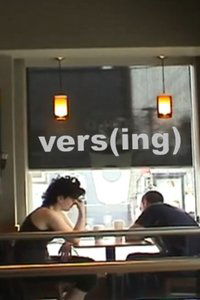
vers(ing) opens in a coffee shop. People, sit, enter and exit. A conversation is heard. The video continues, traveling through the streets of a city, to a park, to other coffee shops, other places. No particular destination is reached, but as we travel, fragments of text are read, conversations are heard, settings, people and objects are noticed. vers(ing) presents a moving toward that is transitory and offers a poetic contemplation of how life, meaning, and film are intertwined and constructed.
poster
?

Untitled #1 (sun vision) (2019)
There were two initial impulses for the film: the paintings of John Turner (whence the bracketed title ”sun vision”) whose almost-not-there paintings dovetail with the space I find myself in at this stage of life: at the frontier between youth and old age, not all-is-still-to-come but not all-is-over yet either; and the spirit-filled paintings of Emily Carr, particularly her later swirling treetops and skies.
poster
?

Anything is Everything (2021)
Anything is Everything is composed of sequences of disparate footage, but with threads to follow: circular shapes from outer and terrestrial space; animals and humans; words and ideas. Stuttering, flickering, blinks and blanks set bits of time and space next to each other - seeing connections from the traces. As with most of Sternberg’s films, Anything is Everything considers the questions: what is life, how do we perceive it, how as humans are we a part of the world?
poster
?

Time Being I – IV (2007)
Brief moments of being, fleeting bits out of the surrounding chaos. These 4 shorts films can be shown separately or one after the other on the roll.
poster
?

Surfacing (2004)
Our busy comings and goings, on the move, working at life are pictured, but layers of images and scratched emulsion make viewing through the depths an effort. If we scratch the surface, however... Glimpses of other states suggest we can surface.
poster
?

Once I Am (2020)
The day as it went along – feeling the light of the present…what else is there?
poster
?

In the Nature of Things (2011)
The central image of in the nature of things is the Forest- sometimes fearful, sometimes a refuge, always mysterious, and the multiple associations and myths embedded in it- myths within which we live and which live within us- our collective history. But, unexpected moments, intensified fragments, catch us unawares- the present confronts us.


mdblist.com © 2020 | Contact | Reddit | Discord | API | Privacy Policy