mdblist.com logo The Best Yasuji Murata Directed Movies


Ratings
Between
and
Between
and
Between
and
With at least
votes
Between
and
With at least
votes
Between
and
With at least
votes
Between
and
With at least
votes
Between
and
With at least
votes
Between
and
With at least
votes
Between
and
With at least
votes
Between
and
With at least
votes
Additional filters
m
Lists, Streaming Services, Cast and more
Create List (37 items)

Login to create a dynamic list


poster
63
24
6.8
/202/
59
/11/
62
/20/
3.4
/532/
5.8
/2114/

The Lump (1929)
An old man with a huge lump on his face encounters a band of Tengu in the mountains.
poster
55
17
6.1
/77/
52
/4/
54
/8/
5.3
/1242/

Our Baseball Game (1930)
A baseball game between the rabbits and tanuki (raccoon dogs).
poster
52
16
6.2
/75/
46
/6/
51
/7/
5.3
/1070/

Taro's Toy Train (1929)
A train conductor goes about his duty. All the characters are animals in human form. Hippo ladies in dresses try to jam into cars and other passengers pull jokes and cause havoc.
poster
53
?
5.6
/16/
52
/4/
65
/2/
4.9
/533/

The Octopus' Bone (1927)
The story is based on the traditional, Japanese myth of Urashima Taro; in which a fisherman is transported from the seashore into a fantastic underwater world on the back of a giant turtle.
poster
49
?
4.9
/29/
51
/7/
44
/5/
4.8
/831/

The Blossom Man (1928)
Adaptation of Japanese fairy tale Hanasaka Jiisan.
poster
58
?
5.6
/47/
61
/7/
62
/2/
5.5
/762/

The Animal Olympics (1928)
A group of animals take part in Olympic sports.
poster
55
?
6.6
/34/
50
/4/
52
/4/
5.6
/804/

Why Is the Sea Water Salty? (1935)
When a poor, yet honest, man rescues an old man who has fallen off a log bridge, the little people of the forest give him a "Mortar of Treasures" that will grant any item that a person desires. The man uses the mortar to become the richest person in the village. But the man's greedy brother steals the mortar and, determined to enjoy all the luxuries by himself, climbs into a rowing boat and heads for an isolated island. On the way, however, he asks for salt from the mortar, but then cannot figure out how to stop it. Finally, the boat sinks under the weight of all the salt, and the mortar sinks to the bottom of the sea where it is pouring out salt to this day.
poster
47
?
45
/2/
5.0
/382/

The Monkey Goes Fishing (1933)
Short animated film by Yasuji Murata
poster
47
?
5.6
/22/
43
/3/
55
/2/
5.0
/646/

Over a Drink (1936)
An unemployed man picks up a flyer which happens to be a notice asking for investors to put up capital for raising a sunken ship. The sum is 10 yen each. To the man, who cannot even scrape together enough money to buy a 10-sen shochu (cheap distilled spirits), this notice seems to be completely beyond his realm. That evening, the man passes by a bar and is enticed inside where he drinks himself to sleep. When he comes to, he realizes that he is at the bottom of the sea. The man meets a samurai who is suspicious of him at first, but when he realizes that the man is Japanese, they cooperate to hunt for treasure. Almost immediately, they come upon the sunken ship of Mononai-go. What will become of them?
poster
48
?
5.7
/31/
40
/2/
50
/1/
5.0
/597/

Private 2nd Class Norakuro: The Training (1933)
Private 2nd Class Norakuro is having the training for recruits, but makes so many mistakes.
poster
51
?
6.1
/26/
53
/3/
45
/2/
5.0
/456/

Sanko and the Octopus: A Fight Over a Fortune (1933)
This early Japanese animation opens with a festival of sorts...
poster
48
?
5.4
/66/
36
/6/
55
/4/
4.6
/898/

Momotaro's Underwater Adventure (1932)
A early Japanese animation short.
poster
50
?
5.9
/38/
40
/4/
60
/1/
4.9
/655/

Private 2nd Class Norakuro: The Drill (1933)
Norakuro keeps getting his allies and enemies mixed up during training.
poster
52
?
6.2
/59/
48
/5/
55
/4/
5.1
/864/

Momotaro's Sky Adventure (1931)
Very early animated short from Japan featuring a cast of anthropomorphic animals.
poster
?
40
/1/

The Development of the Train (1932)
Documentary on the development on trains, with animated sequences.
poster
30
?
20
/2/
20
/1/
5.0
/284/

Electrical Telegraphy, Electric Bells and Telephones (1931)
When copper wire is wrapped around an iron rod and connected to a battery, it becomes an electromagnet. A science teaching material movie that explains the principle and structure of electric bells and telephones by applying the principle of an electromagnet through a fusion of live action and animation.
poster
57
?
55
/7/
60
/1/
5.4
/341/

Kamishibai: The Story of the Tanuki (1933)
A picture-story showman is reading a story about a troublemaking tanuki on the street to children. A starving tanuki with nowhere to go plots to steal offerings from Mangokuzan Temple, which has a lot of offerings. The raccoon sneaks into the temple. While he is eating bean-paste buns, a child bonze comes. So, the tanuki turns himself into a statue of Buddha. A shortened and revised version of The "Enchanted Kettle". According to The History of Japanese Animation written by Katsunori Yamaguchi and Yasushi Watanabe, the picture-story scene at the beginning of the film and the scene of the raccoon dog dancing at the end were added in this version.
poster
49
?
54
/5/
40
/1/
4.7
/316/

At the Circus (1931)
Two girls were watching a street performer. The girls sang out loud and the performer brought them up front so that they could sing for the audience. (Source: MyAnimeList.net)
poster
42
?
42
/4/
40
/1/
4.8
/333/

Kamishibai Kintaro (1934)
Kintaro, gentle and strong, is popular in the forest. He eventually becomes a great samurai with the name Sakata no Kintoki.
poster
53
?
6.4
/32/
50
/3/
53
/4/
5.0
/681/

Taiiku day (1932)
Sports Day at Animal Village. Japanese animation short.
poster
55
?
6.2
/38/
61
/6/
58
/4/
5.4
/711/

Yasuji Murata's Monkey and the Crabs (1927)
A Yasuji Murata version of the classic Japanese story Saru Kani Gassen.
poster
58
?
6.6
/32/
50
/4/
62
/2/
5.7
/408/

Two Worlds (1929)
An adaptation of Aesop's fable The Ant and the Grasshopper but with a slight change. We have a diligent family ants versus a drunken lazy frog, a bourgeois butterfly and grasshopper couple. As winter comes, the frog, butterfly, and grasshopper are ill and starving.
poster
54
?
6.3
/11/
48
/5/
60
/1/
5.0
/336/

Animated Revue: Spring (1931)
Haru is a Japanese word that means spring (season). A lighthearted anime about spring time. It was originally set to an elementary school song. The film features several vignettes.
poster
48
?
5.6
/12/
48
/6/
40
/1/
5.3
/298/

The Donkey (1930)
A man and his young son travel through the countryside to take their donkey to a horse auction. Unfortunately every person they pass has a different opinion on how this should be accomplished, leading to disastrous results when the dim-witted father abandons common sense in an attempt to please everyone.
poster
49
?
5.2
/22/
42
/4/
55
/2/
5.1
/619/

My Ski Trip (1930)
Animated short features bunnies and tanuki having wacky hijinks while going skiing.
poster
55
?
6.5
/12/
67
/7/
40
/2/
5.1
/304/

A Wolf is a Wolf (1931)
A group of animals want to end the violence of the wolf.
poster
54
?
5.3
/12/
47
/4/
60
/1/
5.3
/359/

Tonpei and Sarukichi (1932)
The lazy Tompei is still asleep past 10 o'clock and even at 11 o'clock. He finally wakes up at 12 o'clock at the deafening sound of the angry clock. Hungry, Tompei walks to Sarukichi's house and grabs food Sarukichi has harvested. The next day, while Sarukichi is working in the hills, Tompei beats Sarukichi's two children who are staying at home and tries to steal things from Sarukichi's house. Sarukichi, who is alerted of the situation via telephone from his children races home, is infuriated at the cruel Tompei and punches him so hard he falls down.
poster
57
?
6.2
/80/
53
/10/
48
/9/
3.4
/203/
5.4
/1001/

The Monkey Sword Masamune (1930)
During the late Kamakura period, there lived a famous swordsmith known as Masamune whose renown as a swordsmith was so great that even long after his passing the term “Masamune” was used to describe any fine sword. Even today, the Masamune Prize is awarded to swordsmiths of outstanding skills in their craft. In Yasuji Murata’s cutout animation The Monkey Masamune a humble messenger is rewarded with the gift of a Masamune sword when he saves the life of a monkey and her child.
poster
45
?
40
/5/
50
/1/
4.5
/285/

The Cat Purr Dance (1932)
A family of mice dance to entertain a cat that disrupted their festivities after returning home early. (Source: MyAnimeList.net)
poster
52
?
4.8
/5/
45
/2/
60
/2/
5.2
/275/

Princess of the Moon Palace (1934)
When a young princess is kidnapped by an evil toad, her salvation is in the hands of a brave villager.
poster
?
6.2
/45/
50
/5/
54
/7/

The Bat (1930)
Once upon a time, the birds and the beasts fought each other in a war. It was a terrible conflict, and the clever bats would side with the birds when the birds were looking victorious, and then they would become allies of the beasts when that side was winning battles. At last the war came to an end, the two parties reached an amicable settlement, and a great party of friendship was held. But when it came to the turn of the bats to perform in the program, their fence-straddling tactics were exposed, and everyone refused to associate with them. Since that time, the bats have been too ashamed to show their faces during the day, coming out only at night to flit silently around.
poster
50
?
5.1
/40/
50
/4/
55
/4/
4.7
/781/

The Larks' Moving Day (1933)
The Larks' Moving Day. Early Japanese animation.
poster
52
?
6.1
/49/
53
/3/
50
/2/
5.0
/734/

Corporal Norakuro (1934)
Norakuro is now a corporal. On his day off-duty, he goes to eat chicken on the stick. On his way home, he falls into a slumber and dreams of fighting with the Monkey Corps, his enemy.
poster
?

Sports Day (1932)
Animals train for the animal Olympics.
poster
?

Momotaro Under the Sea (1932)
Momotaro takes to the ocean to fight a shark.
poster
?

The Donkey (1931)
A miller and his son clumsily attempt to transport a donkey.
poster
?

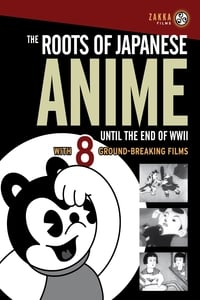
The Roots of Japanese Anime Until the End of WWII: 1930-1942 (2008)
A rare glimpse of early Japanese sound anime and prewar Japanese culture, The Roots of Japanese Anime features the masterworks of such pioneers of Japanese animation as Noburo Ofuji, Yasuji Murata, and Kenzo Masaoka, in addition to Mitsuyo Seo’s Momotaro’s Sea Eagle, the notorious war cartoon billed as Japan’s first feature anime. These movies represent the brilliance and variety of anime, ranging from beautiful Japanese paper animation to powerful multiplane cel cartoons. They also evoke the fascinating complexity of Japan, a nation that is then both marching towards war, enlisting kids in militarist nationalism, yet also delighting in a mixture of modern popular culture, ancient folk tales, irreverent comedy, and the everyday life of prewar Japanese children.


mdblist.com © 2020 | Contact | Reddit | Discord | API | Privacy Policy