mdblist.com logo The Best András Szirtes Directed Movies


Ratings
Between
and
Between
and
Between
and
With at least
votes
Between
and
With at least
votes
Between
and
With at least
votes
Between
and
With at least
votes
Between
and
With at least
votes
Between
and
With at least
votes
Between
and
With at least
votes
Between
and
With at least
votes
Additional filters
m
Lists, Streaming Services, Cast and more
Create List (11 items)

Login to create a dynamic list


poster
?
10
/1/

Gravitation (1981)
Scratched film stock that reminds us that film remains in a state of birth, a shocking poem of physical suffering and the danger of organized violence that can be denied by a cynical but free gesture.
poster
?
10
/1/

Suburb (1972)
A romantically charged cinematic poem capturing the mood in Budapest in the late 1960s and early 1970s, in a work inspired by avant-garde films of the 1920s and directors such as Walter Ruttman and Dziga Vertov.
poster
?
10
/1/

Diaries 1 - 8 (1984)
Film journals are constantly being made and edited and end in death - Szirtes's intimate social journals are an epic, multi-layered system, a remarkable reflection of an individual and of contemporary mores.
poster
?
6.3
/7/
50
/3/

Birds (1981)
A film study in which the symbol of flight which contradicts human limitations inspires an emotional rhythm of scenes varying along three lines: the human desire for the sky (the first attempts for flight), the death of birds (experiments on animals) and the death of a human being in heights (a fall which isn´t a flight).
poster
?
7.1
/17/
10
/1/

Lenz (1986)
This experimental film, reminiscent of Csontváry's paintings, creates the character of the "Lenz" of the 20th century. The hyper-sensitive polihistor of the second millennium is no romantic, literary man suffering from schizophrenia, but a nuclear scientist suffering from radio-active contamination. Lenz is sent to rest to the mountains by his doctor.
poster
?
5.7
/18/
10
/1/

After The Revolution (1990)
A very loose adaptation of Master and Margarita, but for all that, it is explicitly based on Bulgakov's novel, in a thoroughly experimental way. What you see in this film is documentary-like scenes shot with a simple video camera in Moscow and Budapest, and New York, and these scenes are linked to the novel by some explicit links, and by these, the film goes beyond the level of being but a visual documentary which would only have reminded the viewer of The Master and Margarita.
poster
?
70
/1/

A kisbaba reggelije
N/A
poster
?
6.1
/66/
50
/3/
61
/7/

Dawn (1979)
Szirtes's masterful experimental work is a dazzling composition of several years of filming within an industrial macro/microcosm, an abstract model of revolution and the beauty of daybreak.
poster
?
5.5
/31/
5
/2/

The History of the Pronuma Clusters (1983)
The film is a series of sketches in the genre of the happening, describing the state of mind of grass-roots intellectuals during the early 80s. In situation games, six people portray their environ-ment purely by the tools of the pantomime, in a visual, meta-communicative way. The absurdity of the world is shown in a fullness typical for the childhood world of the protagonist, a young teenage girl. This absurdity is just as much present in faceless bureaucracy, social deviation, atomisation, wars and the scenes of diplomacy fighting a perfect Babel, as it is there in the soon to disappear spheres of intimacy, i.e. scenes of love, family and leisure, interwind in each other. The scene of the leaf swarming with Pronuma clusters also proves the same.
poster
?

Introduction to Filmmaking (1996)
From a request from Hungarian Television, two friends followed Audras Szirtes how he makes his films.
poster
?

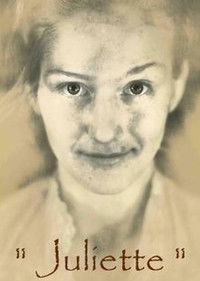
Juliette (2008)
As a child, she lives happily ever after as a goose-herder girl, although her dreams are already foreshadowing her sad fate. She spends her adolescent years with nuns, who discipline her harshly, leaving deep, unhealed scars on her soul. Her true, great, one and only love seems to be fulfilled, but he wants to leave her. She won't let him, she's embracing his love, all of it. They lock her up in a madhouse. That's where the therapist will find it. The relationship between the two of them, the evocation of each other's personalities, is the theme of the film, which raises the question: which of them is the patient?


mdblist.com © 2020 | Contact | Reddit | Discord | API | Privacy Policy