mdblist.com logo The Best Peter Weibel Movies. Go to The Best Shows


Ratings
Between
and
Between
and
Between
and
With at least
votes
Between
and
With at least
votes
Between
and
With at least
votes
Between
and
With at least
votes
Between
and
With at least
votes
Between
and
With at least
votes
Between
and
With at least
votes
Between
and
With at least
votes
Additional filters
m
Lists, Streaming Services, Cast and more
Create List (11 items)

Login to create a dynamic list


poster
67
11
6.4
/191/
61
/5/
65
/10/
3.7
/500/

Invisible Adversaries (1977)
Anna, an artist, is obsessed with the invasion of alien doubles bent on total destruction. Her schizophrenia is reflected in the juxtapositions of long movie camera takes with violently edited montages: private with public spaces; black & white with colour, still photographs with video, earsplitting sounds with disruptive camera angles. Anna uses her body like a map; after a devastating quarrel with her lover, she paints red stitches on herself. Watching their scenes together, we realize how seldom, if ever before, the details of sexual intimacy have been shown in film from the point of view from a woman. Export privileges rupture over unity and never settles for one-dimensional solutions
poster
Kanopy
58
10
5.6
/133/
55
/6/
53
/10/
3.4
/491/

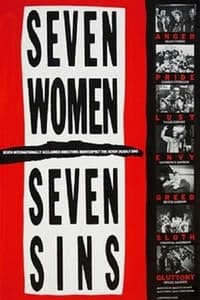
Seven Women, Seven Sins (1986)
Seven Women, Seven Sins (1986) represents a quintessential moment in film history. The women filmmakers invited to direct for the seven sins were amongst the world's most renown: Helke Sander (Gluttony), Bette Gordon (Greed), Maxi Cohen (Anger), Chantal Akerman (Sloth), Valie Export (Lust), Laurence Gavron (Envy), and Ulrike Ottinger (Pride). Each filmmaker had the liberty of choosing a sin to interpret as they wished. The final film reflected this diversity, including traditional narrative fiction, experimental video, a musical, a radical documentary, and was delivered in multiple formats from 16, super 16, video and 35mm.
poster
50
9
5.1
/246/
51
/8/
52
/12/
3.4
/486/
29
/2/

Seduction: The Cruel Woman (1986)
Wanda, a dominatrix who runs an S&M gallery on the Hamburg waterfront, must choose between her lesbian lover and an American trainee.
poster
?
10
/1/

Home Movies 1971-81 (1985)
Home movies shot on Super 8mm by W+B Hein over 10 years.
poster
?
20
/1/

Stille Weiher (1998)
Gustav Klimt in search of the artwork of the present. Using Klimt's paintings, "Quiet Pond" presents reasons why kitsch is art, art is kitsch, and art is art or possibly not. Who can know and who can judge?
poster
?
6.1
/9/
10
/1/

Hernals (1967)
Documentary and pseudo-documentary procedures were filmed simultaneously by two cameras from different viewpoints. The material was then divided into phases of movement. In the montage each phase was doubled. The techniques used in this process vary. Also the sound was doubled, again using different techniques. Two realities, differently perceived according to the conditions of this film, were edited into one synthetic reality, where everything is repeated. This doubling up destroys the postulate: identity of copy and image.
poster
44
?
6.0
/126/
35
/2/
38
/6/

Exit... But No Panic (1980)
A guy having sex with a woman on a rooftop – just to get her coffee-machine.
poster
?
6.3
/29/

ViennaFilm 1896-1976 (1977)
This film is a kind of anthology about Vienna, from the invention of film to the present day. The aim is to break down the usual clichéd "image of Vienna" such as that found in the traditional "Vienna Film" by juxtaposing documentary footage, newly shot material and subjective sequences created by various artists. Individual, self-contained sections of the film gain new meaning within the context of historical material. Familiar sites appear estranged when edited together with historical scenes. Other scenes appear like a persiflage or satirical. The film does not incorporate any commentary whatsoever. It is a collage of diverse materials aimed at conveying a distanced image of Vienna to the viewer
poster
?
4.8
/8/
20
/1/
64
/5/

Post-Socialism+Retro Avantgarde+Irwin (1997)
After the fall of the Berlin wall, much changed in Yugoslavia, that is now ex-Yugoslavia; a post industrial, post modern, post national, post colonial, post structural society, that can be perhaps summarized in the concept of post socialism? The disintegration of the concept of ideology means that notions are no longer clear. Because we think that we are outside an ideological context, but perhaps we ourselves are the centre of the ideology. It is this idea that corresponds with the thoughts about post socialism in the nineties, and probably the post ideological society of late capitalism as well. The end of the ideological period then perhaps seems imminent. These thoughts are considered in this philosophical media reflection, based on documentary fragments, statements by Peter Weibel and Slavoj Zizek and the works of three artists: Mladen Stilinovic (Zagreb), "Kasimir Malevich" (pseudonym, Belgrade) and IRWIN (Ljubljana).
poster
?
10
/1/

Kunst & Revolution (1968)
‘Kunst & Revolution is a documentation on the famous action known as the “filthy uni mess”, which led to a jury court trial. I only had a few metres of film with me and they were quickly spent, but still the film gives one a rough impression of the events. As a whole mythology quickly arose around the event, I altered the material to counteract this effect (through repetition, and adding other material, for instance from a film about keeping dogs, and my own leftover footage from the Muehl action number 54 ‘Im Freudenauer Wasser’).’ In film 16 of his anthology Ernst Schmidt Jr. documented the actions of Günter Brus, Otto Muehl, Peter Weibel and Oswald Wiener.
poster
?

Anyone who dares will take the cold off their horse (2010)
Directed by Alexander Kluge


mdblist.com © 2020 | Contact | Reddit | Discord | API | Privacy Policy