mdblist.com logo The Best Ranko Akagi Movies. Go to The Best Shows


Ratings
Between
and
Between
and
Between
and
With at least
votes
Between
and
With at least
votes
Between
and
With at least
votes
Between
and
With at least
votes
Between
and
With at least
votes
Between
and
With at least
votes
Between
and
With at least
votes
Between
and
With at least
votes
Additional filters
m
Lists, Streaming Services, Cast and more
Create List (19 items)

Login to create a dynamic list


poster
Criterion Channel
82
7.9
/22424/
76
/523/
77
/433/
4.2
/50771/
91
/46/
89
/336/

Kwaidan (1965)
Taking its title from an archaic Japanese word meaning "ghost story," this anthology adapts four folk tales. A penniless samurai marries for money with tragic results. A man stranded in a blizzard is saved by Yuki the Snow Maiden, but his rescue comes at a cost. Blind musician Hoichi is forced to perform for an audience of ghosts. An author relates the story of a samurai who sees another warrior's reflection in his teacup.
poster
Kanopy
83
61
7.8
/2173/
74
/30/
76
/62/
3.9
/3901/
100
/7/
96
/21/

Red Angel (1966)
In 1939, Sakura Nishi is a young army nurse who is sent to the field hospitals in China during the Sino-Japanese war. She has to assist the surgeon Dr. Okabe with an incredible number of amputations. In the crowded wards, she gives sympathy to some of the soldiers, including sexually servicing one who has lost both arms and has no hope of returning home. She falls in love with Dr. Okabe, and follows him to the front, even though he is impotent from his morphine addiction.
poster
Criterion Channel
73
49
7.6
/1961/
66
/23/
69
/51/
3.9
/2573/

Intentions of Murder (1964)
The neglected common-law wife of a Japanese librarian is repeatedly harassed by a young man with a heart condition who seduces her with the prospect of a better life.
poster
?
10
/1/

Wheat Will Never Fall (1955)
Follow-up to 'The People of Sunagawa'
poster
?
6.9
/16/
10
/1/

Cape Ashizuri (1954)
Among Yoshimura’s complex and political works, this episodic film, set in the early 1930s, follows the life of a young left-wing student activist disenchanted by the increasingly hawkish state of Japanese society.
poster
?
6.6
/8/

The Brick Factory Girl (1946)
This film focuses on Koreans living in Japan. The filmmaker’s humanism comes across in the portrayal of a girl living in a shabby tenement, the warmth of a Korean girl she meets, and the friendliness of this Korean girl’s family.
poster
?
10
/1/

Four Seasons of Women (1950)
Woman melodrama by Shiro Toyoda
poster
?
5.6
/26/
10
/1/
60
/1/

Phoenix (1956)
Emi Ikushima, a star actress in the Roses, is half-hearted, but she wasn't disappointed by the news of her father Enmy's sudden death, and she performed enthusiastically on the stage that night, attracting a crowded audience.
poster
?
7.7
/31/
40
/4/
72
/5/

All My Children (1963)
School teachers responsible for the lives of their students work to evacuate Allied bombings near the end of WWII.
poster
?
6.8
/22/
50
/2/

Wood and Stone (1940)
Movie about a devoted and single woman and her daughter. The mother's nickname is "Bokuseki" (wooden head) because of his supposed stubbornness. No.10 in the list of "The 10 best films of 1940" by Kinema Junpo.
poster
?
6.2
/25/
45
/2/

The Street Without Sun (1954)
N/A
poster
?
7.1
/89/
10
/1/
78
/5/

Bad Girl (1963)
Wakae is a 15 year old girl who lived under the same roof with her alcoholic father and stepmom. Her mother had died years ago. She spends her nights at a rundown bar, sharing drinks and cigarettes with the lowlife drunks. She has nowhere to turn and no one to talk to, until she is reunited with her childhood friend, Saburo, who brings warmth to her heart.
poster
68
?
6.9
/123/
67
/6/
3.5
/217/

Morning's Tree-Lined Street (1936)
As suggested by the title, this film takes up the theme of the city, beginning with a series of traveling shots from Chiyo's point of view on a bus leaving the countryside and entering the metropolitan cityscape. After some fruitless job hunting in downtown Tokyo, Chiyo accepts a job as a bar hostess in Shiba ward. Well away from glamorous Asakusa and Ginza, this is a neighborhood bar where the women are dirt poor, each having only one kimono to their name....
poster
?
6.8
/38/
80
/1/
63
/3/

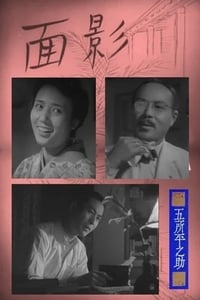
A Visage to Remember (1948)
During his summer holiday, Kawasaki Ryuichi (Ryuzaki Ichiro), a handsome engineer in his late twenties, visits his teacher and mentor, Professor Inagaki (Sugai Ichiro), at his seaside home. There he meets the professor's lovely young wife, Sachiko (Hamada Yuriko), and is unsettled by the striking resemblance she bears to his wife, who died three years earlier. Attracted to Sachiko, he does his best to hide his feelings. The couple, however, senses a deep-seated melancholy in him. Attributing it to the loss of his wife, they urge him to marry their niece, Kaoru, but he is not interested. Shortly after, Fumiko , Sachiko's older sister, realizes that Sachiko and Kawasaki have feelings for each other, but she keeps her counsel. One day Kawasaki, Sachiko, and Kaoru go boating when a storm forces them to stay overnight at a hotel. Unable to sleep, Kawasaki takes a walk along the beach where he finds Sachiko, also unable to sleep. He declares his love for her.
poster
51
?
7.3
/143/
25
/2/
70
/3/

Ditch (1954)
Postwar Tokyo. Pin and Toku live in the squatter area of Kappanuma. Pin and Toku are avid gamblers. They take in Tsuru, a slightly demented woman who has run away from a geisha house.
poster
?
7.4
/36/
50
/1/

Actress (1947)
Sumako, a country girl, becomes a great actress with the help of Hogetsu,a scholar who brought some of European realism to the Japan's stage. The relationship leads to the end of his marriage and the breakup of his Arts Society. This is another version of Kenji Mizoguchi's film "The Love of Sumako the Actress" ("Joyû Sumako no koi"), from the same year. Both tells the story of the famous actress Sumako Mitsui (1886-1919), considered the first great modern theater actress in Japan. Mizoguchi himself is said to have preferred Kinugasa's version.
poster
64
?
6.9
/119/
55
/5/
68
/8/

Composition Class (1938)
Masako, the daughter of an impoverished itinerant tinsmith, wins a grammar school composition contest with an essay about her neighborhood. The much publicized essay ends up causing the family problems and their chronic money troubles threaten Masako's further education.
poster
?

Drifting (1935)
Adaptation of Fumiko Hayashi's novel.
poster
?

Okumura Ioka (1940)
Okumura Ioko story directed by Shiro Toyoda


mdblist.com © 2020 | Contact | Reddit | Discord | API | Privacy Policy