mdblist.com logo The Best Sadao Maruyama Movies. Go to The Best Shows


Ratings
Between
and
Between
and
Between
and
With at least
votes
Between
and
With at least
votes
Between
and
With at least
votes
Between
and
With at least
votes
Between
and
With at least
votes
Between
and
With at least
votes
Between
and
With at least
votes
Between
and
With at least
votes
Additional filters
m
Lists, Streaming Services, Cast and more
Create List (44 items)

Login to create a dynamic list


poster
73
36
7.5
/624/
65
/19/
70
/12/
3.9
/1377/
80
/5/

Wife! Be Like a Rose! (1935)
Kimiko, a Tokyo white-collar working girl, lives with her serious, intellectual, haiku-writing mother. Kimiko seeks to marry her boyfriend but needs her absent father to act as the go-between and negotiate the marriage. Kimiko travels and finds her father living with a second family.
poster
?
7.6
/21/

Subterranean Heat (1938)
N/A
poster
?
6.7
/32/
60
/2/

Brother and Sister (1936)
Ino tries to control Mon’s every move, but she becomes a fallen woman, having an affair with a student, Obata whereas her sister San remains a “good girl.” The mother is very supportive of her daughters, but, the father, Akaza, who is the stonecutter foreman on the damn, lacks control of his family.
poster
?
5.4
/6/

Kantaro of Ina (1943)
War-time jidaigeki by Eisuke Takizawa.
poster
?
7.5
/24/

A Husband's Chastity: If Spring Comes & Fall Once Again (1937)
Kayo and Kuniko graduated from girls' school together and are as close as sisters. Kuniko's fiancé, Minakami, feels something that attracts him deeply towards Kayo. On the other hand, Kayo prays for the happiness of her best friend and marries a very ordinary man. However, at one point, this mediocre but increasingly ferocious husband died in an accident ... A triangular love story develops depicting a woman's heart that sways between love and morals. Based on a novel by Nobuko Yoshiya, there were originally two parts to the film (If Spring Comes & Fall Once Again), both supposed to be 85 minutes, but apparently what we have now is this 103-minute amalgam of the two.
poster
?
4.9
/23/
50
/1/

Shanghai Landing Party (1939)
This film attempts to reconstruct the tension of the Battle of Shanghai through an episode in an understated way, introducting its story in a documentary mode. In the film story, Japan's marine regiment protects Japanese residents and Chinese refugees-women and young children-from rampant street fighting, Shanhai Rikusentai unsparingly uses its first eight minutes for an official-mannered self-justification of the war. From the viewpoint of explaining Japan's military operation,the narration refers to the city s spatial division in sync with maps on screen.
poster
?
6.0
/10/
60
/1/

A Man's Flower Road of Triumph (1941)
N/A
poster
?
6.3
/25/
60
/1/

I Am a Cat (1936)
1936 P.C.L. adaptation of Natsume's novel.
poster
?
5.8
/9/

Numazu Officer School (1939)
Japanese war movie
poster
?
6.0
/11/
40
/1/

Song of the White Orchid (1939)
Song of the White Orchid was a co-production of Toho and Mantetsu, the railway that served the colonial region of Manchuria, and the first film in the Kazuo Hasegawa/Shirley Yamaguchi (Ri Koran) “Continental Trilogy.” Handsome Hasegawa (representing Japan) runs up against an impertinent Yamaguchi (representing the continent); not surprisingly, in the course of the film the woman comes around and realizes the benevolent intentions of the Japanese. In Song of the White Orchid Yamaguchi leaves Hasegawa, who plays an expatriate working for the railway, because of a misunderstanding. She joins a communist guerilla group plotting to blow up the Manchurian railway. Learning of the subterfuge that led to the misunderstanding, she renews her faith in Hasegawa—and by extension Japan—and tries to undermine the plot.
poster
?
5.6
/8/

Radio Queen (1935)
N/A
poster
65
?
6.9
/125/
70
/1/
60
/5/

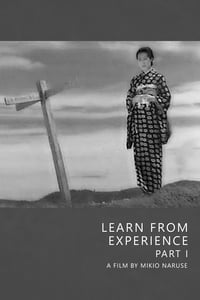
Learn from Experience, Part One (1937)
Part 1 of a 2-part romance based on a story by noted author Kikuchi Kan. The central character here is Toyomi (played by Takako IRIE, star of Mizoguchi’s "Water Magician), a rich young woman in love with Shintaro (Minoru TAKADA), a rich young man. Unfortunately, Shintaro’s father is in the process of arranging a marriage for him with Yurie (Chieko TAKEHISA), the scion of an even wealthier family. In order to avoid this, the two young lovers flee to Tokyo to live together. When Shintaro comes back to proclaim his intent to marry Toyomi, his father browbeats him into attending the long-arranged marriage meeting with Yurie. While Shintaro is back home, Toyomi goes on a vacation trip with her closest chum, Michiko (Yumeko AIZOME). At a class reunion, Toyomi is to distressed (at not having heard from Shintaro for so long), she doesn’t go out on the town with her classmates. Michiko, however, runs into Shintaro and Yurie (also out on the town), and pulling him aside, demands an explanation.
poster
?
6.6
/117/
60
/1/
62
/5/

Learn from Experience, Part Two (1937)
Part 2 of a 2-part romance (fist part - Kafuku zempen) based on a story by noted author Kikuchi Kan. In the second half, we discover that Toyomi is pregnant -- and while Shintaro and Yurie are on their extended honeymoon, she bears his child, a girl named Kiyoko. She is supported in adversity by Michiko -- and gets considerable moral support from not only her own mother but also from Shintaro's mother and siblings. Even more surprisingly, Yurie strikes up a friendship of sorts with her. When Yurie learns that the child is Shintaro's, she convinces Toyomi that it would be best to let Shintaro (and her) raise Kiyoko, so Toyomi can get on with making a proper life for herself. Tearfully, Toyomi agrees. Sometime later, Michiko goes to visit Toyomi -- and sees her at work, as a kindergarten teacher.
poster
?
5.5
/12/
60
/1/

Oath on the Burning Sands (1940)
A Japanese army engineer (Hasegawa) on the mainland must put his personal feelings for a beautiful Chinese woman (Ri) aside if he is to succeed at building a highway through the "bandit"- (aka anti-Japanese militia-) infested hinterlands.
poster
?
6.4
/22/
60
/1/

Tipsy Life (1933)
The film generally regarded as Japan’s first true musical was also the first film made entirely in-house by the pioneering studio P.C.L., a company founded specifically to take advantage of emergent sound technology. P.C.L. worked in collaboration with a brewer’s firm, Dai Nihon Biru, who met the production costs of the film in full, and whose products are featured in the film in an example of the sophisticated and modern merchandising typical of the studio’s early work. The film is partially set in a beer hall, and its story concerns a beer seller at a train station and her relationship with a music student trying to create a hit song. Director Sotoji Kimura was to become a company stalwart, making such films as Ino and Mon, while actress Sachiko Chiba would emerge the studio’s first real star, appearing in such films as Wife Be Like a Rose.
poster
?
6.4
/16/
60
/1/

The Giant (1938)
Japanese adaptation of LES MISERABLES. The last film of director Itami took inspiration from Les Miserables. Transpiring during the Southwestern War of 1877 in Japan, which was the last civil war in the country, a criminal escapes prison only to be found by a monk. The criminal decides to turn a new leaf based on their conversation and goes on to become a town's mayor. He hears news of a mistaken arrest and identity. The revelation of truth is the start of a series of miseries.
poster
68
?
6.8
/279/
73
/3/
65
/8/
3.4
/293/

Avalanche (1937)
The study of a one-year marriage that begins to crumble. A married man is torn between the love of his wife, and the attraction to a cousin of his wife.
poster
?
6.8
/33/

The Battle of Kawanakajima (1941)
This epic depicts the battle between Uesugi Kenshin and Takeda Shingen. The focus of the story is the struggle by the unit leader in charge of the main supply wagons and the supply troops to transport materiel to the Uesugi army. To this are added episodes involving an itinerant woman.
poster
?
6.5
/101/
40
/2/
54
/4/

Five Men in a Circus (1935)
The main focus is on the 5 member band of a small circus as it runs into problems while touring rural Japan. It also pays lots of attention to the two daughters of the aging and irascible ringmaster-circus owner. The high points are the sound (and score) and cinematography featuring a lot of vertiginous panning (appropriate - as high wire trapeze artists are also an important element in the film). A fascinating side-light on 30s Japan.
poster
?
6.3
/8/
40
/1/

Romantic and Crazy (1934)
Studio P.C.L. was specifically founded to make sound films, and this early musical balances the aesthetics of the sound film with those of the stage revue. The king of Tokyo’s revue stage, comedian Ken’ichi Enomoto (Enoken) had made his name in the capital’s theatrical district of Asakusa. The film employed not only the star, but his entire theatrical troupe, and the narrative was structured around scenes which Enoken had played successfully on stage. Billed as offering 'Japan’s number one comedy actor and Japan’s number one musical comedy,' the film self-consciously borrowed from Hollywood musical comedy; indeed, the original posters carried spoof endorsements by Eddie Cantor and the Marx Brothers! Director Kajiro Yamamoto, making his P.C.L. debut, would become a stalwart of the company and its successor, Toho. He was to have a profound influence on Japanese film history as mentor to Akira Kurosawa, who assisted him on a number of films including Horse (Uma, 1941).
poster
?
5.9
/9/

Enoken's Kondo Isami (1935)
Enoken plays both Kondo Isami and his deadly enemy Sakamoto Ryoma in this comedic, song-filled vision of the Meiji Restoration.
poster
?
6.8
/22/

The Opium War (1943)
The Opium War is a 1943 black-and-white Japanese film directed by Masahiro Makino. "Ahen senso" in Japan refers to the First Opium War. The story of the film concerns this war.
poster
62
?
6.1
/250/
70
/1/
58
/4/
3.3
/204/

Horse (1941)
Ine Onoda, the eldest daughter of a poor family of farmers, raises a colt from birth and comes to love the horse dearly. When the horse is grown, the government orders it auctioned and sold to the army. Ine struggles to prevent the sale.
poster
?

Roppa no Hōjiro Sensei (1939)
Original work by Hyakken Uchida.
poster
?

A Husband's Chastity: Fall Again (1937)
Kayo and Kuniko graduated from girls' school together and are as close as sisters. Kuniko's fiancé, Minakami, feels something that attracts him deeply towards Kayo. On the other hand, Kayo prays for the happiness of her best friend and marries a very ordinary man. However, at one point, this mediocre but increasingly ferocious husband died in an accident ... A triangular love story develops depicting a woman's heart that sways between love and morals.
poster
?

A Husband's Chastity: If Spring Comes (1937)
Kayo and Kuniko graduated from girls' school together and are as close as sisters. Kuniko's fiancé, Minakami, feels something that attracts him deeply towards Kayo. On the other hand, Kayo prays for the happiness of her best friend and marries a very ordinary man. However, at one point, this mediocre but increasingly ferocious husband died in an accident ... A triangular love story develops depicting a woman's heart that sways between love and morals.
poster
?

Karayuki-san (1937)
"Karayuki-san offers a no-holds-barred depiction of the discrimination faced by a former prostitute who returns to Japan from Singapore with her mixed-race son." - Alexander Jacoby (Oxford Brookes University)
poster
?

Tokai no kaii 7-ji 03-bu (1935)
Miyamoto Tokunosuke works at a Detective Agency in the heart of Tokyo. When his lover Ranko tells him that she's pregnant, he begins to worry. His company hasn't paid his backsalary and he doesn't know how he will pay for the new baby. His friend Suihei tells him about a job at a bar, but on his way there, Tokunosuke meets a mysterious man who sells him a newspaper...for tomorrow!
poster
?

Ryū no misaki (1945)
1945 Japanese movie
poster
?

Blizzard Ronin (1939)
The film tells about the life of the former vassal of the Ako clan - Fuwa Katsuemon Masatane.
poster
?

Botchan (1935)
1935 P.C.L. adaptation of Natsume's novel.
poster
?

Hikari to kage (Zenpen) (1940)
Part one of two.
poster
?

Drifting (1935)
Adaptation of Fumiko Hayashi's novel.
poster
?

Wakaki sugata (1943)
N/A
poster
?
5.0
/7/

Green Earth (1942)
Set in Qingdao, China, a Japanese company locates an office there and begins work and cooperation with a local Chinese company for business. Many Japanese engineers also move to China, with their families, for the company in order to construct a canal. There are young Chinese resisting the Japanese in this area.
poster
?
6.2
/5/

A Gentle Breeze With Father (1940)
9th directorial work by Yamamoto Satsuo.
poster
?

Hometown (1937)
Set in a rural area of Shinshu, a drama in which a woman who graduated from a women's college in Tokyo with her brother's efforts opens up a new life in her hometown where she is tired of the city. The original is a stage play by Yobun Kaneko. Directed and written by Mansaku Itami.
poster
?

Hikoroku Laughs a lot (1936)
Hikoroku Laughs a lot
poster
?

Story of Leadership (1941)
In this semi-documentary, an older locomotive driver is tasked with training younger ones and is currently training two in particular. The old man is finding the task overwhelming as it is hard work with practical lessons and classroom components. His wife has died, but he has three daughters with the oldest taking care of her younger siblings.
poster
?

Hikari to kage (Kōhen) (1940)
Part two of two.
poster
?

Mother's Melody (1937)
The prewar film Haha no kyoku (Mother's Melody, 1937) is known for its place in Japanese film history as one of the top three melodramas as well as for its authorship: Yamamoto Satsuo is an auteur not usually associated with filming melodramas. Yamamoto made the film right after he moved, along with his mentor Naruse Mikio, to the Toho film company. A number of subsequent postwar mother's films adopted some of its essences, making it a genre-defining moment in Japanese cinema. This great melodrama is atypical of Yamamoto's output, much of which deals with political corruption and inequities within social institutions and offers a strong anti-establishment appeal.
poster
?

Zoku Hebihimesama (1940)
N/A
poster
?

Sinking the Unsinkable (1944)
Japanese Warmovie
poster
?

Tadano Bonji: Jinsei Benkyô (1934)
Based on the comic by Yutaka Asou


mdblist.com © 2020 | Contact | Reddit | Discord | API | Privacy Policy